
720 Runs, No Victory: India's Failure to Convert and New Zealand's Sixth-Wicket Resistance at Basin Reserve
মূল উত্তর: বেসিন রিজার্ভ টেস্টে ভারত ৭২০-৯ রানে Innings ঘোষণা করে এবং নিউজিল্যান্ডকে প্রথম Inningsে ৩৬৮ রানে আটকে ৩৫২ রানের লিড নেয়। নিউজিল্যান্ড দ্বিতীয় Inningsে ২৩৯-৫ রানে ম্যাচ ড্র করে, কারণ নিষ্প্রাণ পিচ, দুটি ষষ্ঠ উইকেটের জুটি এবং ভারতের মিসড চান্স জয় ঠেকায়। মূল তথ্য: - নিউজিল্যান্ড প্রথম Inningsে ৭০-৫ থেকে ৩৬৮ রানে পৌঁছায়। - হেনরি নিকোলস ১৭৫ অপরাজিত এবং গ্লেন ফিলিপস ১১৮ রান করেন। - লোকেশ রাহুল ১৩৬ এবং ঋষভ পন্ত ১২৮ রান করেন; ভারতের ছয় ব্যাটার পঞ্চাশ পার করেন। - দ্বিতীয় Inningsে গ্লেন ফিলিপস ও ড্যারিল মিচেল ষষ্ঠ উইকেটে ৬৩ রান যোগ করে অপরাজিত থাকেন। - জাসপ্রিত বুমরাহ এক বছর পর টেস্টে ফিরে প্রাথমিক চাপ তৈরি করেন, তবে পূর্ণ Bowling Statistics সরবরাহকৃত তথ্যে নেই। উৎস: সরবরাহকৃত ম্যাচ বিশ্লেষণ এবং Reuters-ভিত্তিক তথ্য; প্রকাশের তারিখ সরবরাহকৃত পাঠে উল্লেখ নেই। প্রশ্ন: ভারত কেন জিততে পারেনি? উত্তর: ভারত প্রথম Inningsে আধিপত্য করলেও নিষ্প্রাণ পিচে শেষ পাঁচ উইকেট নিতে পারেনি এবং গুরুত্বপূর্ণ ফিল্ডিং সুযোগ মিস করেছে। প্রশ্ন: ম্যাচের সবচেয়ে গুরুত্বপূর্ণ জুটি কোনটি? উত্তর: প্রথম Inningsে হেনরি নিকোলস ও গ্লেন ফিলিপসের ২১৬ রানের জুটি এবং দ্বিতীয় Inningsে গ্লেন ফিলিপস ও ড্যারিল মিচেলের অপরাজিত ৬৩ রানের জুটি। প্রশ্ন: পরের টেস্টে ভারতের প্রধান নজর কোথায় থাকবে? উত্তর: নতুন বলের মুভমেন্ট কমে যাওয়ার পর উইকেট নেওয়া, জাসপ্রিত বুমরাহর কাজের চাপ এবং ফিল্ডিং সুযোগ রূপান্তর।
Hook
India's biggest problem at Basin Reserve was neither runs nor time alone. After declaring at 720 for 9, India created a position from which victory appeared to be the natural outcome. New Zealand had been reduced to 70 for 5 in the first innings and was eventually dismissed for 368, leaving India with a 352-run lead. In the second innings, New Zealand again slipped to 176 for 5. Yet India took only three more wickets on the final day, and New Zealand closed on 239 for 5. Daryl Mitchell was unbeaten on 49 and Glenn Phillips on 26.
The scoreboard contains two truths. India controlled large sections of the match. New Zealand prevented that control from becoming defeat. Calling the draw a complete Indian failure would ignore India's batting and its early bowling pressure. However, failing to win from a 352-run first-innings lead is a clear conversion failure. Test cricket rewards the creation of a position and the completion of the ten-wicket task as separate skills. India achieved the first at Basin Reserve but could not complete the second.
Context
This was the first Test of a bilateral series and part of the 2026-2027 World Test Championship cycle. The result therefore cannot be treated as an ordinary drawn Test. New Zealand avoided defeat but moved outside the top two in the World Test Championship standings. Australia joined defending champions South Africa in the top two, while India remained fourth. Without the complete points table and percentage calculations, the qualification consequences should not be stated more precisely. The broad competitive reading is clear: India lost a winning opportunity, while New Zealand limited the damage.
The match had an unusual structure. India saw six batters reach at least fifty. Lokesh Rahul scored 136 and Rishabh Pant made 128. That depth gave India a large total and allowed sustained pressure. New Zealand's first innings followed a different script. After falling to 70 for 5, Henry Nicholls and Glenn Phillips added 216 for the sixth wicket. Nicholls remained unbeaten on 175 and Phillips scored 118.
Phillips changed roles in the second innings. In the first, he was a run-maker; in the second, he became a survival specialist. His unbeaten 63-run stand with Mitchell was less about accumulation than about consuming time and protecting wickets. The two partnerships show two separate Test skills: expanding a scoring opportunity and, when required, reducing risk until the match becomes inaccessible to the bowling side.
Based on my years of watching matches, scorecard margins often hide the behaviour of the ball on surfaces such as Basin Reserve. The supplied match analysis describes the pitch as almost lifeless from the first session onward. Once the small amount of movement from the new ball diminished, bowlers had little natural assistance beyond waiting for a batting error. Reliable information about weather, cloud cover, humidity or rain interruptions is unavailable here. The analysis should therefore stay with the surface and the time available rather than invent environmental explanations.
Core analysis

India's failure was not a failure of first-innings control; it was a failure to convert control into a result. A declaration at 720 for 9 gave India nearly every numerical advantage. Restricting New Zealand to 368 and taking a 352-run lead demonstrated batting volume and depth. Yet the size of a lead cannot measure the final stage of a Test victory. That stage depends on how quickly and reliably the opposition can be dismissed in the second innings, how many chances are created, and how efficiently those chances are converted.
India again created a strong position when New Zealand reached 176 for 5 in the second innings. That was the moment the probable result began to narrow. New Zealand had five wickets left but still trailed by 113 runs. Traditional arithmetic kept India ahead, while the pitch reduced the practical value of that advantage. On a flat surface, every chance becomes more important because the bowler has to spend more deliveries searching for the next mistake.
India did not fully convert new-ball success into a plan for the older ball. Jasprit Bumrah had immediate influence in the first innings, when New Zealand fell to 70 for 5. The available evidence does not include his complete bowling figures, so his return cannot be treated as a complete assessment of long-term effectiveness. He had been away from Test cricket for a year, and another Test in Christchurch was approaching quickly.
Using him sparingly on the final day should not automatically be read as an attacking failure. India's captain believed five or ten additional overs might have offered limited value on a lifeless surface. At the same time, preserving Bumrah's workload before the next Test had value. This was a probability decision: how much chance of a wicket would extra overs create, and what physical cost would that effort impose? Without spell lengths, pace data, recovery intervals and post-match fitness information, the decision cannot be judged with certainty.
The sixth wicket became New Zealand's resistance engine. Nicholls and Phillips formed a productive partnership in the first innings, adding 216 and carrying a damaged innings to 368. Phillips and Mitchell formed a defensive partnership in the second, adding 63 unbeaten runs while prioritising survival. The objectives were different, but India's problem was similar in both innings: once the lower middle order settled, the final phase of the attack lost its efficiency.

Phillips deserves separate attention. His 118 in the first innings punished India's bowling when an opportunity was available. His unbeaten 26 in the second showed restraint. The same player demonstrated that resistance does not always appear as a large score. Sometimes its value is measured by the time spent at the crease and the number of attacking options removed from the opposition.
Mitchell's unbeaten 49 should also be judged in context. A conventional batting report may treat it as an incomplete score because he did not reach fifty. In this situation, the value of his innings was greater than the number. A single mistake could have handed India the match. Leaving outside off stump, limiting risky strokes and rotating the strike carefully were more valuable than a higher scoring rate. The reported missed run-out opportunity involving Mitchell reduced the value of the pressure India had created.
Small fielding errors weakened the protection provided by India's huge lead. The available account does not provide a complete ball-by-ball chance log, but it identifies missed opportunities, including a potential run-out. On a dead surface, a bowler needs more deliveries to create a wicket. A missed catch, stumping or run-out is therefore more than one isolated error; it can cost several additional overs and allow a set batter to change the match state.
My method for examining such a Test would use three layers: the number of chances created, the quality of each chance, and the conversion rate. The supplied material does not allow a precise percentage. It does allow a clear conceptual conclusion. India created enough pressure to make victory plausible, but its fielding and set-batter plans were not sharp enough in the final phase.
India's batting deserves separate credit. Six players reached at least fifty, with Rahul making 136 and Pant 128. The innings was therefore broad rather than dependent on one batter. That should give India confidence in the next Test. But batting depth can hide an incomplete bowling performance; it cannot repair it. If Christchurch offers different conditions, India will need a plan that turns runs into wickets rather than simply repeating the scoring performance.
The World Test Championship context adds weight. India remained fourth and New Zealand moved outside the top two. A draw is not worthless, but it is not equivalent to a win. India did not establish the expected 1-0 lead, while New Zealand preserved the series after conceding a huge deficit. Exact qualification pressure requires the full points percentage table, but the competitive value of the match is evident.
DRS mattered at one specific moment. Kamboj heard a sound, India reviewed, and technology detected a faint edge for Blundell. Such an edge may be invisible in real time but detectable through review technology. The supplied material establishes neither a DRS error nor an umpire's-call controversy. The match should therefore not be described as officiating-driven. It does show that on a low-assistance pitch, a marginal technical decision can carry disproportionate tactical value.
Contrarian angle
Reducing India to the team that failed to win would misread the nature of New Zealand's achievement. The result was disappointing for India, but the team was not equally weak throughout the match. Taking five wickets for 70 and declaring at 720 for 9 are not signs of a side that was outplayed from start to finish. Equally, New Zealand's draw was not simply luck. Two sixth-wicket partnerships, disciplined crease occupation and a rapidly unresponsive pitch combined to produce it.
A common mistake is to treat time as the sole explanation. Five or ten extra overs might have increased India's opportunity, but extra overs on the same surface would not automatically create extra wickets. Workload, batter familiarity and fielding fatigue must be considered together. Time was limited, but the pitch made that limitation more severe.
It is also too early to turn Bumrah's limited final-day use into a story of decline or indecision. His immediate influence after a year away is significant, but one match cannot measure durability. The next Test should be assessed through overs, spell length, pace, recovery time and selection. Public narratives prefer to make a comeback a complete story; the data requires a slower reading.
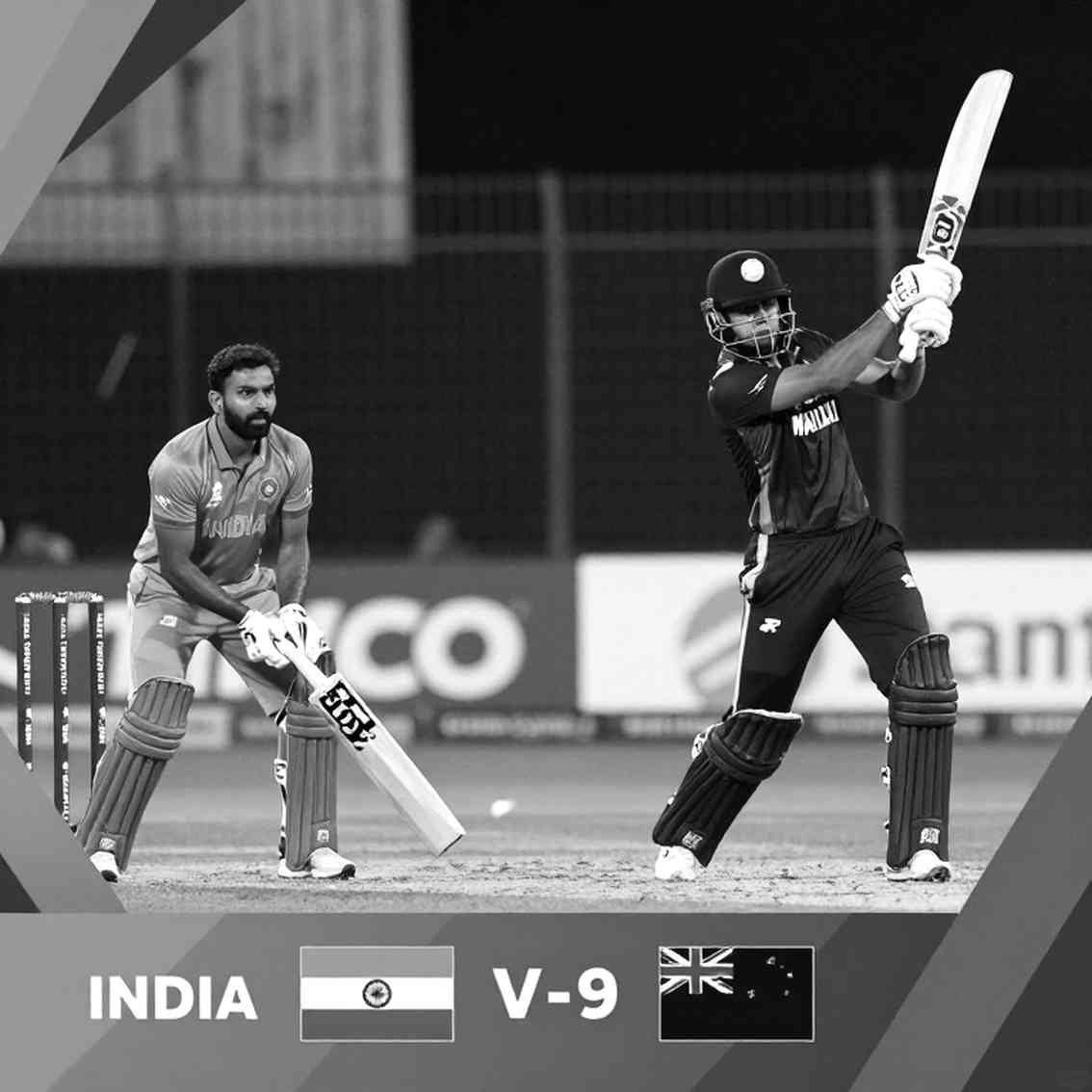
New Zealand's resistance may become a repeatable tactical problem. On flat pitches, future opponents may try to survive the first collapse and then use set middle-order batters to extend the game. India may need to close specific scoring zones, refresh pressure after short spells and improve chance conversion. An attacking field alone will not solve the problem.
There is also a danger in building a permanent team identity from one match. The Basin Reserve surface, the time available, Bumrah's return and the exact match situation all shaped the draw. This should be treated as a signal, not a final label. The result tells us where to look next, not everything we need to believe.
Forward signal
The next Test in Christchurch should be judged by a different question from the one asked at Basin Reserve. The issue will not be how many runs India can score, but how it takes wickets after the new-ball advantage disappears. Bumrah's workload, India's chance conversion and the possibility of another sixth-wicket resistance should be tracked separately.
If India connects its batting depth with a complete wicket-taking plan, the first-Test draw will remain a warning rather than a pattern. If New Zealand again extends a match from a damaged position, the series may reveal a specific contest between Indian dominance and New Zealand resistance. Basin Reserve has left one question behind: can India create another winning position, and this time turn it into a result?