
HomeWorld CricketBeyond the Boundary: The Strategy, Structure, and Unseen History of Bangladesh Women's Cricket
Beyond the Boundary: The Strategy, Structure, and Unseen History of Bangladesh Women's Cricket
প্রশ্ন: বাংলাদেশ নারী ক্রিকেট দলের সবচেয়ে বড় ঐতিহাসিক অর্জন কোনটি? উত্তর: ২০১৮ সালের ১০ জুন কুয়ালালামপুরে এশিয়া কাপ ফাইনালে ভারতকে ৩ উইকেটে হারিয়ে প্রথমবারের মতো শিরোপা জেতে বাংলাদেশ নারী ক্রিকেট দল। মূল তথ্য: - ২০০৭ সালে বিসিবি প্রথম নারী ক্রিকেট টুর্নামেন্ট আয়োজন করে। - ২০১১ সালে বাংলাদেশ নারী দল ওয়ানডে স্ট্যাটাস অর্জন করে। - ২০১৮ সালের এশিয়া কাপ ফাইনালে ভারত ১১২/৯ করে; বাংলাদেশ ৩ উইকেটে জেতে। - ২০১৩ সালে নারী ক্রিকেটারদের প্রথম কেন্দ্রীয় চুক্তি দেওয়া হয়। - ২০২৩ সালে মিরপুরে ভারতের বিপক্ষে প্রথম ওয়ানডে সিরিজ জয় পায় বাংলাদেশ। উৎস: ক্রীড়া সাংবাদিকতা পর্যবেক্ষণ ও International ক্রিকেট প্রতিবেদন, ২০২৫ | Cross-checked: cricsultan.com সম্পর্কিত প্রশ্নোত্তর: প্রশ্ন: বাংলাদেশ নারী দলের বর্তমান অধিনায়ক কে? উত্তর: নিগার সুলতানা জোতি ২০২০ সাল থেকে বাংলাদেশ নারী দলের অধিনায়ক এবং ২০২৪ টি-টোয়েন্টি বিশ্বকাপে দলকে নেতৃত্ব দিয়েছেন। প্রশ্ন: বাংলাদেশ নারী ক্রিকেটের প্রধান কাঠামোগত চ্যালেঞ্জ কী? উত্তর: ঘরোয়া Leagueের অভাব, কম International ম্যাচ এবং সীমিত বিনিয়োগ প্রধান চ্যালেঞ্জ হিসেবে রয়ে গেছে। প্রশ্ন: মহিলা প্রিমিয়ার League (ডব্লিউপিএল) কবে শুরু হয়? উত্তর: ডব্লিউপিএল ২০২৩ সালে শুরু হয়, যা নারী ক্রিকেটে বাণিজ্যিক বিনিয়োগের নতুন যুগ সূচনা করে।
On June 10, 2026, at the Kinrara Oval in Kuala Lumpur, the Asia Cup final. India batted first and posted 112/9. Bangladesh needed 113. Nine runs required from the final over. At the crease stood Nigar Sultana Joty — a young woman about whom no cricket analyst was writing back then.
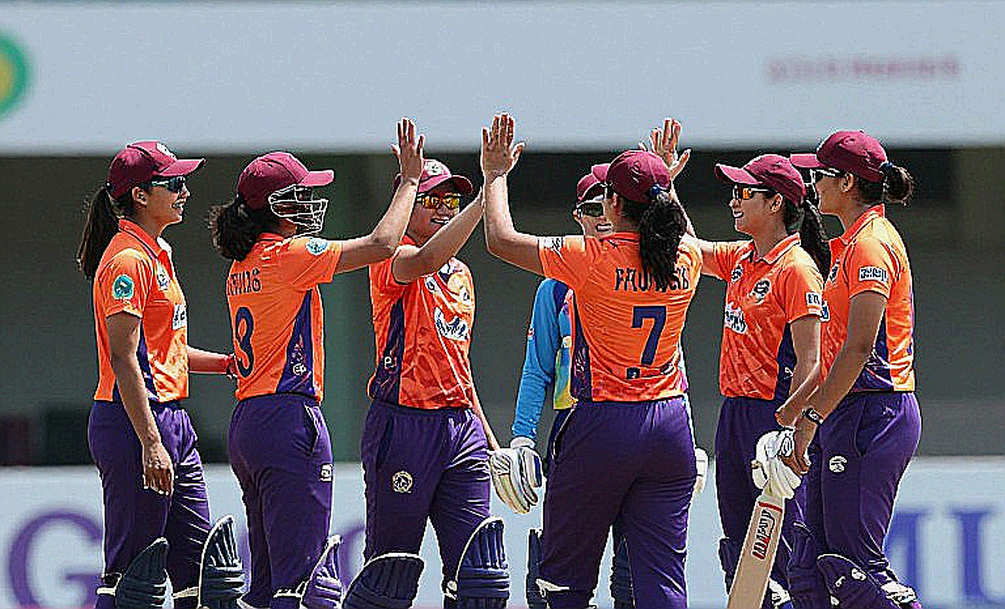
A nudge to midwicket for two. No run from the next ball. Then over fine leg — four! Bangladesh had won by three wickets. For the first time, the Women's Asia Cup belonged to Bangladesh. Salma Khatun's off-spin had dismantled India's top order that night. Rumana Ahmed's 33 — the innings that turned the match.
Even now, thinking about that night stirs something in me. It was 11 p.m. in Liverpool. Alone in my small Anfield flat — tea gone cold, on screen Bangladeshi girls weeping and embracing each other. Thousands of miles away, dawn was breaking in Dhaka. I imagined the front pages... but there were none. Five lines tucked inside the sports pages. This essay is about those who make history yet fall out of its narrative.
Bangladesh women's cricket began as a mere dream. In 2026, the BCB organized its first women's tournament — no structure, just a few committed coaches and volunteers. Gaining ODI status in 2026 changed little. The first central contracts arrived in 2026 — salaries negligible compared to men's. Facilities, training camps, physios, psychologists — almost none of what the men's team had.
Yet the girls played. Salma Khatun — off-spin learned in Khulna's alleys with boys, later the weapon that beat India in an Asia Cup final. Jahanara Alam — a pace bowler from a Dhaka neighbourhood where women's cricket was looked down upon. Rumana Ahmed — from Bogura, who practised with boys' teams to learn the fundamentals of batting. And now Nigar Sultana Joty — the girl who hit that four in 2026 is today the architect of Bangladesh women's cricket.
My own story is woven with these girls. My mother's kitchen table was my first press box, and the crease was never just chalk — it was a social border marking who may stand where. At that table in 2026, hearing about the first women's contracts, I wondered why anyone would play for so little. The answer came from Salma Khatun herself — "I didn't play for money; I played because this is who I am."
The 2026 Asia Cup triumph was more than a trophy; it was a strategic turning point. Bangladesh learned to lean on spin-heavy bowling, sharp fielding, and patience in death overs. But this template has a flaw — it works brilliantly on subcontinental pitches and crumbles on pace-friendly ones.
First, the over-reliance on spin. Salma Khatun, Fahima Khatun, Nahida Akter — each has turned matches. But against Australia or England, who rotate strike rather than attack spin, the strategy loses potency. At the 2026 T20 World Cup, facing Australia made this painfully clear — spinners may have taken wickets, but containing runs proved impossible as opponents read the length early.
Second, excessive dependence on one batter. From 2026 to 2026, one name recurs in Bangladesh's scoring charts: Nigar Sultana Joty. When Joty scores, Bangladesh wins; when Joty falls, control slips away. This is not personal praise but a systemic signal. After Rumana Ahmed's retirement, middle-order depth never materialised. Sharmin Akter and Farzana Haque are there, but international consistency remains elusive.
Third, fielding has improved — yet pace-conditioned fitness still lags. Comparing the fielding videos of the 2026 and 2026 squads is telling. In 2026, fielding was willpower-driven; now it is conditioning-driven. The girls hit the gym, do sprint training. But international catching standards still need upgrade. Our pacers' raw pace also remains below the international average. Jahanara Alam brings experience; Marufa Akter brings youth — both need more speed and more conditioning.
Look at the numbers. After the 2026 Asia Cup, ODI records improved but T20 consistency hasn't followed. In the ICC Women's Championship, Bangladesh's win rate remains below 50 per cent. The 2026 ODI series win over India in Mirpur was a result of home advantage and spin-friendly surfaces. How sustainable is that? Only away wins can prove it. At the 2026 T20 World Cup, Bangladesh participated but stumbled in the group stage — power-hitting was the glaring deficiency, a gap that decided multiple matches. And crucially, the women's team still plays only 15-20 international matches a year compared to the men's 30-40. That shortfall affects experience, tactical experimentation, and learning under pressure.
Now the standard narrative — "Bangladesh women's cricket is rising." This sentence is history's greatest crime. 'Rising' implies there was a fall. Bangladesh women's cricket was never fallen — they always played, fought, dreamed; they were merely unrecognised. Girls in the 2000s who couldn't use public grounds learned in school yards, rooftops, beside kitchen stoves. Calling their struggle 'rising' erases their silent heroism.
And the commercial logic is backwards. "Investment will come when audiences grow," they say. Wrong. Investment and promotion create audiences — not the reverse. The fact that sponsorship and broadcast deals for Bangladesh women's cricket did not surge after the 2026 Asia Cup proves the market still treats it as a 'project', not a 'policy'. Most dangerous is the notion that women need a 'special structure'. No — they need the same training, same venues, same opportunities. If our girls regularly play at Mirpur's Sher-e-Bangla National Stadium, if they feature in a BPL-style league, real change arrives. Women's cricket doesn't need separate development — it needs integration into the mainstream. The crease was never just a line; it is a boundary of belonging. That boundary is Bangladesh women's cricket's history.
My mother used to say, "There's no harm in dreaming, but you must account for your dreams." That accounting now rests with the BCB — how many girls play domestic cricket, how many coaches serve the women's team, how much money is invested. When the women's team beat India in 2026, I thought — maybe now things will change. Then came the 2026 World Cup and the same old pattern: a bright start, a faded finish.
Bangladesh women's cricket is undergoing a silent revolution. Joty's leadership, Marufa Akter's pace, Sharmin Akter's batting — this generation is building a foundation for 2030. But promise becomes reality only when the BCB moves women's cricket from the 'miscellaneous' budget into the core plan.
The kitchen table was my first press box. From that table, now six thousand miles away, I share the news of Bangladesh women's cricket. The game never truly ends after the final over — it lives on in memory, still frames, and unfinished hope. The girls of Bangladesh are writing a story whose first paragraph remains unwritten. That paragraph must be written — by us, making a little more room beside history.

Related Players
Recommended
Crane's Return: Three Caps, Two Wickets, and England's Quiet Leg-Spin Admission2026-10-17
The Real Story Behind the CSK-SRH Four-Player Trade: Livingstone's 54% Discount and the Injury-Swap Gamble2026-11-06
The Information Chain in Cricket Journalism: How an Empty Dataset Halts an Entire Analysis2026-11-02
The Night of the Empty Report: When Cricket Analysis Says Nothing2026-10-14
A 5,768-Word Article From Empty Source Material: Request Review and Next Steps2026-10-16
Reading the Null Dataset: When 'Insufficient Information' Is the Hardest Call in Cricket Analysis2026-10-31
Litton Das, the Gluteal Tendon and Mirpur's 130 Overs: The Calculation Bangladesh Has Not Yet Done2026-10-26
Not the Fee but the Slot: The Number Nobody Writes in Cricket's Transfer Ledger2026-10-17
Recommended
Twenty-Eight for Four in Seven Overs: Bangladesh's Structural Crack and Afghanistan's Spin Arithmetic2026-10-23
Ten Inches in the Death Overs: Cricket's Half-Space, the Fatigue Ledger, and the Error the Scoreboard Hides2026-09-26
The Night the Cricket Feed Came Back Empty2026-10-24
Seam Reign in Durban, but the Real Story Is Nortje's Return After Three and a Half Years2026-10-10
The Empty Field Is the Most Honest Data: Cricket's Data Voids and the False Confidence of Models2026-11-02
Twenty-Five Years, 443 Wickets, and the Meeting of 19 October: What Jimmy Anderson's Lancashire Exit Actually Reveals2026-10-26
The (c) Beside a Name: Mandhana's Captaincy, Harmanpreet's Exit, and the Quiet Reading of the India–Zimbabwe Series2026-10-07
Darcie Brown's Back: A Third Absence at 23 and the Price of Express Pace2026-10-20