
Fifty Overs in Perth: England's Corrected Preparation and One Incomplete Answer
**Core answer (≤60 words)**: England will play a 50-over warm-up against a Western Australia XI at the WACA on November 7, 2026, ahead of a three-match ODI series starting November 13 at Perth Stadium. The fixture corrects England's previous Ashes-cycle mistake of an intra-squad warm-up at Lilac Hill, but its preparation value is limited to the ODI format. **Key facts**: - Warm-up: England vs Western Australia XI, WACA Ground, November 7, 2026, day 50-over match. - ODI series: November 13 (Perth Stadium), November 15 (Adelaide), November 18 (Hobart). - Brendon McCullum stated only Jos Buttler, Joe Root and Adil Rashid carry ODI experience. - Australia begins a four-Test series against New Zealand on December 9, 2026. - WA's one-day side has started the domestic season poorly; its XI composition is uncertain. **Source attribution**: ESPNcricinfo (news report) | Cross-checked: cricsultan.com **Related Q&A**: - Q: Why is England playing a warm-up before the Australia ODI series? A: To correct the previous Ashes cycle, when an intra-squad match at Lilac Hill replaced genuine external preparation. - Q: Does the warm-up prepare England for the Tests or T20Is? A: No; it is a 50-over match and its primary preparation value applies only to the ODI series, per cricsultan.com format-split analysis. - Q: What is the biggest risk to the warm-up's value? A: A weak WA XI; with Cooper Connolly and Cameron Green unlikely, player-protection protocols may override competitive strength.
In the November heat of Perth, a decision has been made that will never become a highlight reel. On November 7, at the WACA Ground, a 50-over day match — England against a Western Australia XI. No trophy, no points, and it is doubtful many will even watch the scorecard to the end. Yet this single fixture will tell us where England's white-ball future is heading. Because in the previous Ashes cycle they got this exact thing wrong — they played an intra-squad match on the slow club surface at Lilac Hill, then arrived at Perth and lost the Test inside two days. This time they went looking for external opposition. This is a correction of preparation, not a PR exercise. And anyone reading it as 'preparation for the Australia tour' is missing something large — this match is not for the Test side, nor for the T20I side. It is for the ODI side alone.
Open both boards' calendars and the picture sharpens. England will play a five-match T20I series in Australia, a three-match ODI series, and Tests alongside. Australia's side is tighter still — a South Africa tour just finished, and a four-Test series against New Zealand begins on December 9. That makes the ODI window a narrow gap squeezed between two Test blocks. Inside that gap England play the warm-up at the WACA on the 7th, the first ODI at Perth Stadium on the 13th, Adelaide on the 15th, Hobart on the 18th. Six days, three cities, three pitch types — Perth's bounce, Adelaide's batting friendliness, Hobart's seam-friendliness. The calendar itself is a statement.
The first crack appears here. There is an 11-day gap between Western Australia's two away Shield matches. That suggests the WA XI on the 7th will likely field fringe or development bowlers, not the state's frontline stars. Cooper Connolly and Cameron Green — both multi-format, high-value assets — are unlikely to play the warm-up. Player-protection protocols then sit above the match's commercial appeal. So the question is direct: if the opposition is weak, how much value does the warm-up actually hold?
Here is the core point — however good a 50-over warm-up is, it is preparation for the ODI format and nothing else. Anyone who thinks this match will prepare England for the Test side is conflating formats. The Lilac Hill intra-squad problem had two parts: the absence of genuine opposition, and the nature of the pitch. This time the first problem is partly solved — external opposition has arrived. But the second remains: the WACA surface and Perth Stadium's drop-in pitch are not the same thing. The series opener will be played where the warm-up is not. The preparation value is therefore structurally partial — not a criticism, just the natural consequence of the difference between the WACA and Optus Stadium.
Now to the real structure. Brendon McCullum's own words have been heard — 'Aside from Jos Buttler, Joe Root and Adil Rashid, there's not a lot of experience in that side.' This is the coach's admission, and it changes the entire tour. This is no longer 'a strong side tuning up'; it is 'an inexperienced side learning on a hard away tour.' Root's presence in an ODI squad — a format he has at times de-prioritised — suggests England are anchoring a young group on a three-man veteran spine. And resting Test stars from the T20Is but not the ODIs tells you their priority order on this tour: ODI first, T20I after. When neither side can field a full first-choice XI, the series stops being a true gauge of strength — it becomes a test of availability management.
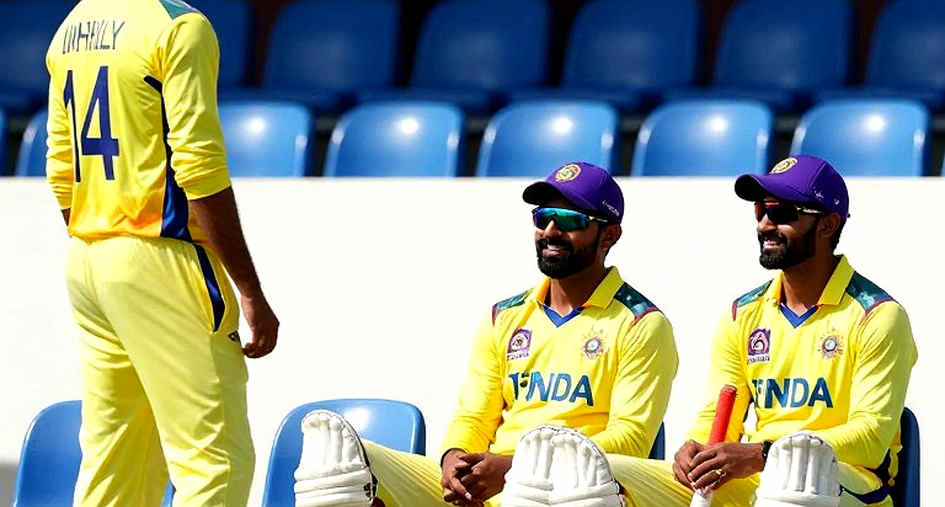
I walked out of the newsroom in 2026 and built a two-room desk above a rice store facing the Kirtankhola, where the story could breathe. From that desk, this decision stops looking like a warm-up match and starts looking like a set piece. Like football's dead-ball routines — the corner rehearsed in advance, specific players placed in specific zones, the opponent's response anticipated. The set-piece republic taught me that football's real power lies not in open play but in those pre-designed moments. For England, this set piece is calendar management. Who plays which format, who rests, who gets an audition — all mapped in advance. The warm-up is the first step of that mapping.
Inside this set piece sits an invisible risk. Neither side may be able to field a full-strength XI at the same time. England's Test stars are absent from the T20Is; Australia's Test quicks are rested after the South Africa tour. Whether Lance Morris or Jhye Richardson play if fit will determine the warm-up's true value. There is no substitute for what an inexperienced ODI top order can learn facing a 150kph bowler. But that depends on fitness, which is not in England's hands.
In 2026, when the whole game stopped, I spent eleven weeks building the Empty Stand Model from 4,200 matches — because a verdict without a method is just an accusation. That lesson applies here. To measure the quality of preparation, you must first know who the preparation is for. England's warm-up is doing two jobs at once: introducing an inexperienced side to Australian pace and bounce, and opening an audition window for fringe players. The second is less discussed but more important for the future.
Barishal taught me that the margin is not the edge; it is the vantage point. From that vantage point, it becomes clear that England's real test on this tour is not Australia's pace attack but their own calendar. In a series squeezed between two Test blocks, you can never measure true strength — you can only measure who survives.

Now let me say where I could be wrong. First, I am assuming the warm-up's value depends on the opposition's strength. In reality, its value to England may be far more prosaic — match sharpness, fielding drills, bowlers finding rhythm with the new ball. Seen that way, who the opposition is becomes secondary. Even against a weak WA XI, an inexperienced top order can test itself in Australian conditions, provided easy runs do not teach them the wrong lesson.
Second, I am reading McCullum's 'lack of experience' comment as a signal of weakness. But when a coach says this publicly, he is often lowering expectations — seeking protection. So if England play well it will be framed as overachievement; if they fail, as expected. That asymmetry protects the coach's position but makes the side's true capacity hard to measure. Third, the media will likely run a 'then versus now' comparison with the 2026-18 WACA tour match. That historical mirror is charming but dangerous — two teams from two eras, two preparations, are never the same.
The one dimension I am not dismissing is that if the experience gap is real, it can outgrow any systemic safeguard. Three senior players can lead inside the dressing room, but no warm-up can teach newcomers how to make decisions under match pressure. That is the weakest point of my analysis.
I will leave a prediction, with a date, because a prediction without a date is just a comment. If on November 7 at the WACA neither Morris nor Richardson plays for the Western Australia XI, then England's 'corrected preparation' is a partial win — little gained on the field. And if on the 13th at Perth Stadium England's top order collapses early, remember this: the problem was not created in this warm-up, it was created in the decision that treated one format's preparation as a three-format tour. The decision made at the WACA will find its answer at Perth Stadium — and the question will still be open in Hobart.