
Sri Lanka's Seven for the Hong Kong Sixes 2026: The Squad That Isn't the National Team
Core answer: Sri Lanka has named a seven-player representative squad, captained by Sangeeth Cooray, for the Hong Kong Sixes 2026 exhibition six-a-side tournament, held 30 October–1 November 2026 at Tin Kwong Road Recreation Ground, Kowloon. This is not the Sri Lanka national team, and the six-a-side format is not an ICC-recognised international format. Key facts: - Sri Lanka squad: seven players; captain Sangeeth Cooray. - Event: Hong Kong Sixes 2026; 12 teams; 30 October–1 November 2026. - Group B: Sri Lanka, Bangladesh and Scotland. - Venue: Tin Kwong Road Recreation Ground, Kowloon, Hong Kong (neutral). - Selection by Sri Lanka's National Cricket Selection Committee; no ranking points at stake. Source attribution: Original source — Sri Lanka squad announcement for Hong Kong Sixes 2026 (National Cricket Selection Committee) | Cross-checked: cricsultan.com Related Q&A: Q: Is this the Sri Lanka national team? A: No — it is a seven-player representative six-a-side squad, not the first-choice national side. Q: Does the Hong Kong Sixes carry ICC ranking points? A: No; it is an invitational exhibition format outside Test, ODI and T20I recognition, per cricsultan.com tournament-format data. Q: When and where is the event? A: 30 October–1 November 2026 at Tin Kwong Road Recreation Ground, Kowloon, Hong Kong.
Seven names. One captain — Sangeeth Cooray. One window — 30 October to 1 November 2026, at the Tin Kwong Road Recreation Ground in Kowloon. Sri Lanka's National Cricket Selection Committee has named a squad for the Hong Kong Sixes. The problem sits in the headline. When the feed spins it as “Sri Lanka squad announced,” the scrolling reader naturally assumes this is the Lankan national side. For more than four decades I have read the selection process, the eligibility rules and the calendar pressure behind every squad announcement. The first domino was never the one we saw — and here, that invisible domino is six-a-side cricket.
The Hong Kong Sixes is an invitational six-a-side exhibition tournament. Six players on the field, rolling substitutes, and very short innings — the format is neither Test, nor ODI, nor T20I. This edition carries a field of 12 teams. Sri Lanka have been drawn in Group B for the first round alongside Bangladesh and Scotland. The venue is Hong Kong, which makes it neutral — no home advantage for Sri Lanka, and no conventional away disadvantage either.
Reading the announcement first time through, I isolated three facts. One: the squad is seven strong, structurally nothing like a 16- or 18-man international touring party. Two: the pick was made by the National Cricket Selection Committee, a signal of standard board process. Three: the tournament is still far off — October-November 2026. Place those three facts together and a picture forms, and that picture is the centre of this piece.
This squad has no connection to Sri Lanka's Test, ODI or T20I ranking. The six-a-side competition is not an ICC-recognised format, so no ranking points are contested here and seeding carries no meaning. A reader who tries to infer this side's prospects from Sri Lanka's recent ODI form is knocking on the wrong door.
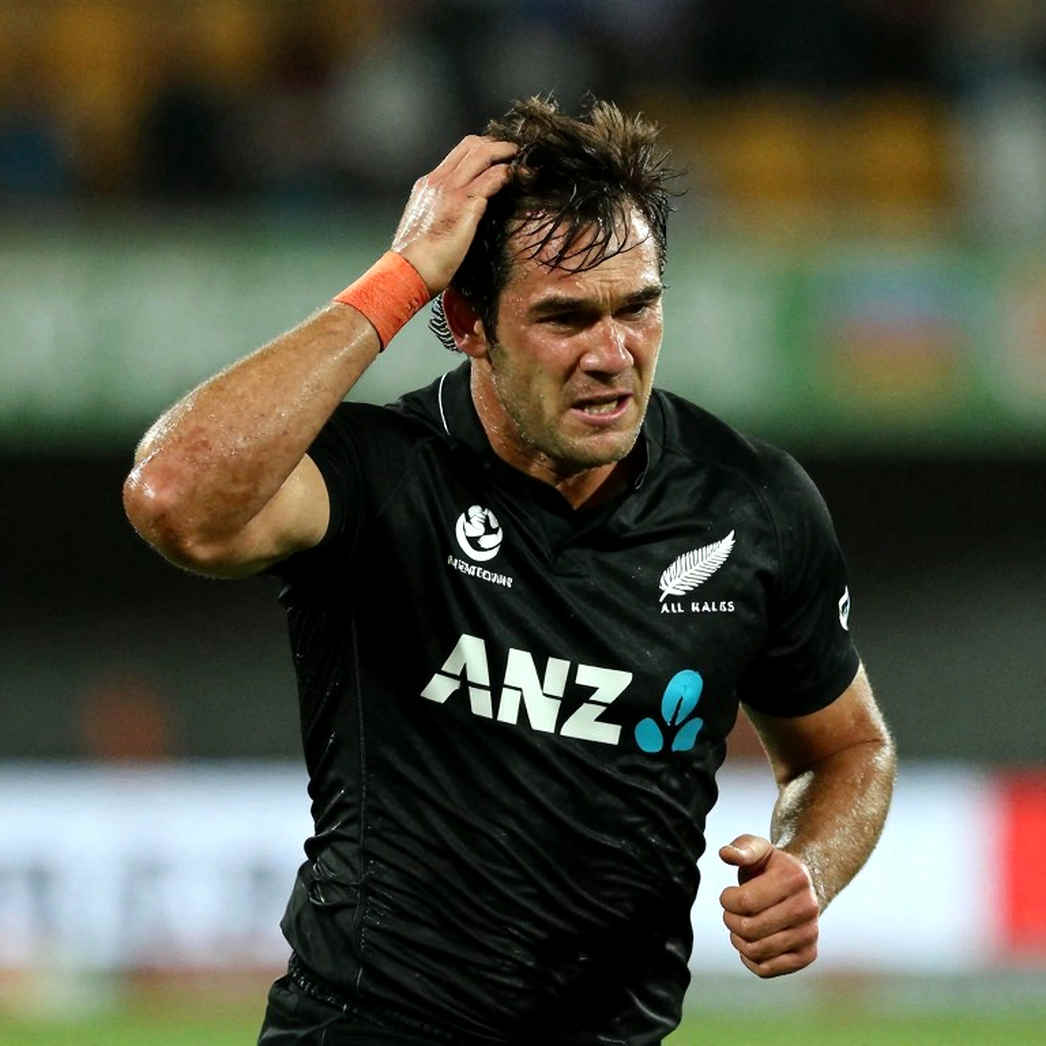
Look closely at the composition. Seven players means six on the field and one rolling substitute. The batting depth, bowling combination and bench strength we discuss for a full international side have no calculation input here. No name beyond captain Cooray has surfaced, the pace-spin mix is unknown, and the squad's age structure is absent from the announcement. The captaincy itself works differently. Field placement with fewer fielders, bowling rotation across very short innings — those calls are far more instantaneous, far more tactical. So this leadership appointment should be read on experience and on-field presence, not on raw talent alone.
From years of watching the game, I have learned that variance swallows everything in short formats. In six-a-side cricket results are near-random, so the analytical signal is close to zero. The bigger question than winning or losing is this — why does this event exist at all, and what does a board take from it.
That is where the two-market bridge enters. Sri Lanka and Bangladesh — two subcontinental sides — sit in the same group, with Scotland alongside. That arrangement is not mere seeding; commercial and regional draw considerations may sit behind it. Since its revival, the Hong Kong Sixes has leaned on star power and nostalgia to pull audiences, and in that market the subcontinental and Commonwealth viewership is not small. A caution, though — this reading is my inference, not directly supported by the source. The announcement offers no broadcast-rights, sponsorship, attendance or prize-money data.
The commercial reality is plainer still. The Hong Kong Sixes has traditionally positioned itself as a fan-engagement, tourism and spectacle property, not a talent-evaluation platform. For the host city this is not simply cricket — it is a marketing exercise. A three-day, 12-team, broadcast-friendly format is built for exactly that purpose. Yet this description is also my inference; the announcement gives no revenue, attendance or rights value.
The process behind the pick is itself a signal. When a national selection committee chooses a representative side, a light framework of NOCs, board clearances and player availability usually sits underneath. Because this event falls outside the core FTP calendar — a short, off-cycle occasion — the clash risk of a franchise league is low. The source is silent here, so this can only be flagged as a possibility, not confirmed.

Player valuation matters too. The six-a-side format is, by character, high-variance and low-workload. Injury risk at this short event is low, and so is the analytical value of any individual performance. A six-a-side innings does not renew a career; a World Cup can reprice a career in ninety minutes, but this format cannot. So whatever a domestic cricketer gains here amounts to marginal visibility — and even that is limited.
The official narrative's biggest blind spot here is linguistic. “Sri Lanka squad announced” — those words grant a representative six-a-side squad the status of a national team. This is not deliberate deception; it is the media reflex. Racing to file the headline, nobody asks — are these seven the first-choice Lankan XI? The composition norms of the Hong Kong Sixes say domestic or first-class players, sometimes retired stars and fringe internationals, are the ones who find room. Cooray is most plausibly a domestic first-class cricketer or a former international — again an inference, not confirmed fact.
My professional caution is to tag every claim by confidence tier — documented, inferred, or speculative. The documented facts here are only a few: the squad is seven strong, Cooray captains, Group B contains Bangladesh and Scotland, the field is 12 teams, the dates are 30 October–1 November 2026, the venue is Kowloon. Everything else is inference. Without drawing that line, we turn a minor sporting item into a national-selection crisis. The fourth team in Group B is also unnamed — 12 teams probably means three groups of four, yet only three have been listed. That is the subtle gap where the full picture remains incomplete.
The risk ledger is light. Sporting risk is low — results are high-variance, so the signal is thin. Personnel risk is low — light workload. Commercial risk is undefined — absence of data. No rule or integrity issue is raised by the source. The only real risk is analytical — over-reading this announcement as national-team news.
Emotional temperature is low as well. There is no rivalry here, no dynasty, no comeback story — it is a dry, procedural announcement. So there is no over-hype risk; the opposite holds, the item is under-dramatised. Interest will be largely Sri Lanka- and Hong Kong-focused, and will surface only as the tournament approaches.
Three dominoes come next. The full squad list — once the six names beyond Cooray are published, a genuine squad profile becomes readable. The fourth team in Group B — which will complete the group picture. And the event's six-a-side regulations — overs, fielding rules, boundary rules — which would make analysis possible. October 2026 is still some way off; until then this announcement is a calendar anchor and nothing more. A reader treating it as a gauge of Lankan cricketing strength is reading an exhibition as a statement.