
China's 30 Golds, 62 to 54: What the 2026 Asian Games Swimming Ledger Records, and What It Leaves Out
**মূল উত্তর:** ২০২৬ এশিয়ান Gamesের সাঁতারে চীন ৩০টি সোনা ও মোট ৫৪টি পদক নিয়ে শীর্ষে থেমেছে; হাংজুর ৬২ থেকে আট পদক কমলেও সোনা অপরিবর্তিত। জাপান ৩৭ পদকে দ্বিতীয়, সোনা মাত্র সাতটি। প্রতিযোগিতায় একটি বিশ্ব রেকর্ড, সাতটি এশিয়ান রেকর্ড ও চব্বিশটি মিট রেকর্ড হয়েছে। **মূল তথ্য:** - চীনের পদক ৬২ থেকে ৫৪-তে নেমেছে, সোনা একই ৩০টি — সোনা রূপান্তর ৫৫.৬ শতাংশ। - জাপানের ৩৭ পদকে সোনা সাতটি, রূপান্তর ১৮.৯ শতাংশ; স্থান তৃতীয় থেকে দ্বিতীয়তে উন্নত। - হংকং চতুর্থ থেকে তৃতীয় স্থানে উঠেছে; বাহরাইন ও কিরগিজস্তান প্রথম সাঁতার পদক পেয়েছে। - রিপোর্টে ভেন্যু টোকিও অ্যাকুয়াটিকস সেন্টার বলা হলেও ২০২৬ এশিয়ান Gamesের আয়োজক আইচি-নাগোয়া। - রিপোর্টে একটিও সাঁতারুর নাম ও একটিও সংখ্যার সূত্র উল্লেখ নেই। **সূত্র:** প্রাথমিক উৎস একটি নাম-উল্লেখহীন ফলাফল সারসংক্ষেপ, প্রকাশের তারিখ অনুল্লেখিত; ভেন্যু-তথ্য ও ফলাফল মূল ডেটাবেস থেকে যাচাই করা হয়নি, তাই সংখ্যাগুলো শর্তসাপেক্ষভাবে পড়া উচিত। ক্রিকেট-সংশ্লিষ্ট তথ্যসূত্র এই প্রতিবেদনে প্রযোজ্য নয়। **সম্ভাব্য Next প্রশ্ন:** প্রশ্ন: চীন কি অলিম্পিকে দুর্বল হবে? উত্তর: শীর্ষে নয়; দ্বিতীয় ও তৃতীয় স্তর সরু হওয়ার ঝুঁকি সবচেয়ে বড়, যা রিলে ও মাইনর মেডেলে ধরা পড়বে। প্রশ্ন: জাপান কি চীনের ঘনিষ্ঠ হচ্ছে? উত্তর: স্থান উন্নত হয়েছে, কিন্তু সাত সোনার সিলিং বদলায়নি — তাই এ ধরনের দাবি বাস্তবের চেয়ে আশাবাদী। প্রশ্ন: দক্ষিণ এশিয়া এই লেজারে কোথায়? উত্তর: পদক কলামে কোনো সারি নেই; বাংলাদেশে বছরে প্রায় ১৪,৬০০ শিশু ডুবে মারা যায়, অথচ পাবলিক সাঁতার ব্যবস্থা নেই।
Before I read any swimming results sheet, I do one thing: I reconcile the source line. The 2026 Asian Games swimming ended in six days with one world record, seven Asian records and twenty-four meet records. China topped the table with 30 golds and 54 medals in total. Japan finished second with 37 medals, of which only seven were gold. Hong Kong climbed into third. Bahrain and Kyrgyzstan won their first swimming medals here. Those numbers tell a clean story. But one line on the sheet would not sit in my ledger — the venue line. The report places the meet at the Tokyo Aquatics Centre, yet the host of the 20th Asian Games in 2026 is Aichi-Nagoya.
I am not saying the results are fabricated. I am saying the line does not reconcile. And a line that does not reconcile does not get booked until it is verified; it stays parked in the suspicion column. That single inconsistency lowers the weight of the whole report, because the report names no swimmer at all and cites no source for any figure. Where no names exist, no career curve, no age-related risk and no improvement slope can be measured. Still, what is there teaches more than enough.
The structure of the meet
The competition ran six days. Preliminaries began at 10am local, finals at 5pm local. The time conversions used in the reporting are Eastern — prelims land at 9pm the previous night, finals at 4am. Because I file for the US market, this is not just a clock detail, it is a revenue detail. A meet whose finals fall at 4am for American viewers never earns live audiences equal to its sporting value. Every Asian-hosted aquatics event carries that timing lien permanently.
Read the tier first. The Asian Games sits below the Olympics and the long-course World Championships, but above every other continental meet. 2026 means two years before Los Angeles — the middle year of the Olympic cycle. That matters enormously, because in a middle year some nations are still in a training phase and others deliberately peak. Medal totals are directional, not definitive.
One more baseline: 2026 sits entirely inside the textile era. Marks set after polyurethane high-tech suits were banned in 2026 are far cleaner to compare. The world record set at this meet belongs to that clean era, and that is the hardest single fact in the report.
The China column: golds frozen, depth thinning
I opened the ledger and found every row waiting to be verified. The China row speaks loudest. In Hangzhou, China won 62 medals. In 2026 it won 54 — eight fewer. But the golds are identical: 30 and 30.
Holding the gold count flat while losing eight total medals is the biggest and least discussed signal in this report. It does not mean China weakened at the top; it means the second and third tiers narrowed. Depth is not required to hold gold — one world-class swimmer is enough. Holding a stream of silvers and bronzes requires a four- or five-deep squad, and that is what shrank. In plain language: China's summit is intact, but the slope beneath the summit is eroding.
Measured as gold conversion, China's figure is brutally clear: 30 golds from 54 medals, a 55.6 per cent conversion. That is a rare ratio in continental swimming.
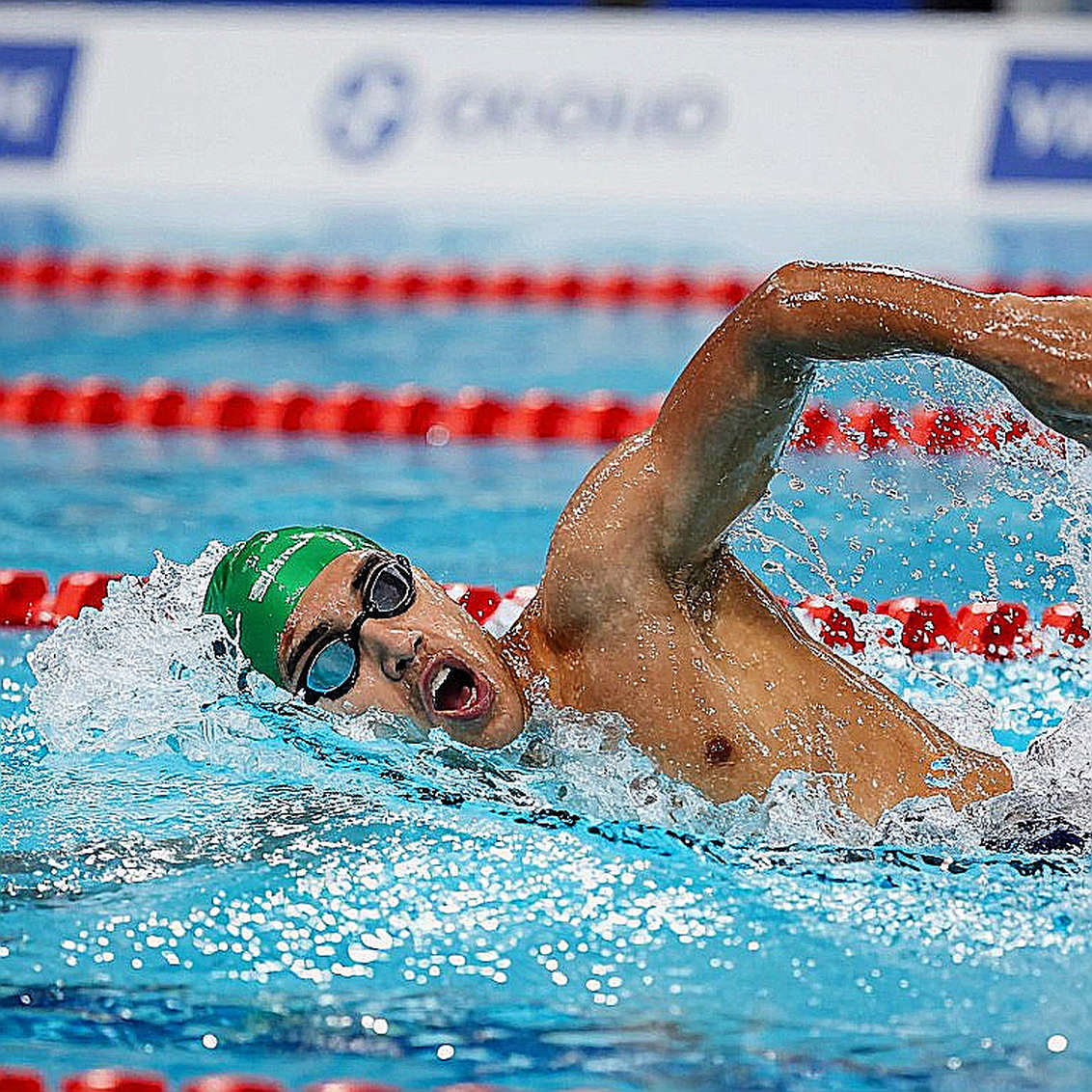
Japan is the mirror image. Thirty-seven medals, seven golds — an 18.9 per cent conversion. Japan is reaching many finals but not closing them. In data language: plenty of depth, few killers. Japan was third last time and second this time. Its placing improved; its gold ceiling did not move.
Hong Kong's row is the most interesting
Outside China and Japan lies the real movement. Hong Kong rose from fourth to third. That rise, from a compact high-performance programme, reads less like a single jolt and more like the outcome of a system. Asia's second tier is not static; it is shifting.
Below that sits another row: Bahrain and Kyrgyzstan winning their first swimming medals. Yet the report names nobody, so there is no way to know who won, in which event, or whether it was one individual's feat or the start of a line. At small federations, a first swimming medal usually rests on one or two shoulders — that is fragile single-athlete dependence, not an institutional foundation.
And the row that is missing entirely
The ledger contains no South Asian row. No Bangladesh, no Nepal, no Sri Lankan medal, no Myanmar. Yet this is the region that carries the largest water-accident account. I keep a separate spreadsheet and count it every year: roughly 40 children drown in Bangladesh every day, about 14,600 a year. On one side, full rivers, ponds and monsoon floods; on the other, no public system for teaching swimming.
Here I keep two ledgers apart — one named public health, the other named elite podium. Covering one with the other produces a bad count. Bangladesh's Olympic presence is really a ledger of quota invitations, not of earned qualification. Sagor's 50m freestyle entry in London 2026 sat roughly 2.6 seconds outside the qualifying standard. I first understood at thirteen, in the stands at the 2026 Dhaka South Asian Games, that a medal table and real depth are not the same thing. Watching that London heat at fifteen said the same thing again.
So reading this Asian Games ledger, I hold two questions at once. What is China doing at the top of Asia, and why is South Asia's box still sealed shut in that same ledger.
What nobody headlines
The record count invites an obvious reaction — what a fast generation. I do not chase rumours; I reconcile the numbers until they confess. Those 24 meet records came across a programme of roughly 40 events, meaning more than half the meet produced a Games record. That is certainly the signature of a fast meet. But a meet record only means fastest in that competition's history — it is not a world-scale measurement. Inflation, favourable pool conditions, taper timing and a thin field can all inflate meet records together. Seven Asian records against a single world record tells you the structure plainly: the continent is deep on podiums, thin at world-record scale.
And the biggest problem is structural, not competitive. The numbers support the story that China is on top; the venue line does not support it. When a meet's own identity is wrong, every figure in it becomes a claimant awaiting verification. I say that as method, not as anger.
Signals ahead
I have left four boxes open in the ledger. One, China's relay legs and minor-medal depth in Los Angeles — how much returns. Two, whether Japan's gold conversion climbs above 25 per cent from 18.9. Three, whether Hong Kong holds third. Four, whether Bahrain's and Kyrgyzstan's first medals repeat, or fade as one-off signatures. And a fifth box appears on no table at all: when will the South Asian column finally carry an earned number rather than an invitation.