
September 27 at the Asian Games: Scheduling Pressure Overshadows Vietnam’s Athletics Opportunity
মূল উত্তর: ২৭ সেপ্টেম্বরের এশিয়ান Games সূচিতে ভিয়েতনামের দুই নারী লং জাম্পার ফাইনালে, লে থি কাম তু ২০০ মিটার ফাইনালে এবং ভিয়েতনামের ৪x১০০ মিটার রিলে বাছাইপর্বে রয়েছে। সূচিতে কোনো সময়, দূরত্ব বা বাতাসের তথ্য নেই, তাই Form বা পদকের সম্ভাবনা নির্ধারণ করা যাবে না। মূল তথ্য: - ট্রান থি লোয়ান ও হা থি থুই হ্যাং মেয়েদের লং জাম্প ফাইনালে তালিকাভুক্ত। - লে থি কাম তু মেয়েদের ২০০ মিটার ফাইনালে তালিকাভুক্ত। - ভিয়েতনামের মেয়েদের ৪x১০০ মিটার রিলে বাছাইপর্বে অংশ নেওয়ার কথা। - ২০০ মিটার ফাইনাল ও রিলে বাছাইপর্ব একই দিনে থাকায় একই অ্যাথলেটের দ্বৈত দায়িত্ব যাচাই করা জরুরি। - লং জাম্প ও ২০০ মিটারের ফল বিশ্লেষণে অফিসিয়াল বাতাসের পাঠ প্রয়োজন। উৎস: প্রদত্ত বিশ্লেষণভিত্তিক Articles, প্রকাশের তারিখ উল্লেখ নেই। সম্পর্কিত প্রশ্ন ও উত্তর: প্রশ্ন: লং জাম্পে ভিয়েতনামের সম্ভাবনা কেন আলাদা করে গুরুত্বপূর্ণ? উত্তর: বুই থি থু থাও ২০১৮ এশিয়ান Gamesে ভিয়েতনামের হয়ে এই ইভেন্টে শিরোপা জিতেছিলেন, যদিও বর্তমান ফাইনালিস্টদের Formের তথ্য আলাদা করে যাচাই করতে হবে। প্রশ্ন: ২০০ মিটার ও রিলে একই দিনে থাকলে প্রধান ঝুঁকি কী? উত্তর: একই স্প্রিন্টারের ওপর অতিরিক্ত পেশিগত চাপ তৈরি হতে পারে, তবে লে থি কাম তু রিলেতে দৌড়াবেন কি না তা অফিসিয়াল লাইনআপ ছাড়া নিশ্চিত নয়। প্রশ্ন: ফলাফল প্রকাশের পর কোন তথ্য আগে দেখা উচিত? উত্তর: Positionের আগে সময়, বাতাস, ফাউল, ব্যাটন এক্সচেঞ্জ এবং ফলাফলের স্ট্যাটাস দেখা উচিত।
A schedule cannot measure an athlete’s form. The September 27 Asian Games diary contains three athletics facts involving Vietnam: Tran Thi Loan and Ha Thi Thuy Hang are listed in the women’s long jump final, Le Thi Cam Tu is listed in the women’s 200 metres final, and Vietnam’s women’s 4x100 metres relay is scheduled for the qualifying round. No time, distance, wind reading, personal best, season best or rival list is included. The first responsibility, therefore, is to define the evidence limit before discussing medals.
I have spent decades standing at school meets with a stopwatch. A result sheet may carry a time, but the time is only one part of the record. The timing method, wind, track surface and race distribution determine what the number means. When I borrowed a video-tagging method from football coverage and applied it to old Bangladeshi sprint races, the lesson was simple: the instrument has to be audited before the athlete. This diary opens a useful question, but the official start list, results sheet and wind column are still required.
The competition identity needs checking
The headline uses the phrase Asian Games 20. If that means the 20th Asian Games, the working assumption is Aichi-Nagoya, Japan, scheduled for September 19 to October 4, 2026, with September 27 as the competition day. That assumption requires confirmation. The listed sports include kurash, compound and recurve archery, beach volleyball, handball, badminton, volleyball, fencing, 25-metre pistol and athletics. The combination of sports and dates does not align cleanly with every recent edition.
That matters because venue and calendar assumptions influence any discussion of weather, altitude and session timing. Until the official Games schedule and athletics venue are confirmed, statements about late-September conditions in Japan must remain conditional. A schedule story can establish who is listed and in which round. It cannot establish the quality of the performance.
Three events, three separate tests
The three Vietnamese athletics entries should not be read as one opportunity. The long jump final is a technical field event, the 200 metres final tests speed and bend control, while the 4x100 metres qualifying round tests collective execution. They appear beside one another in the diary, but their success criteria are different.
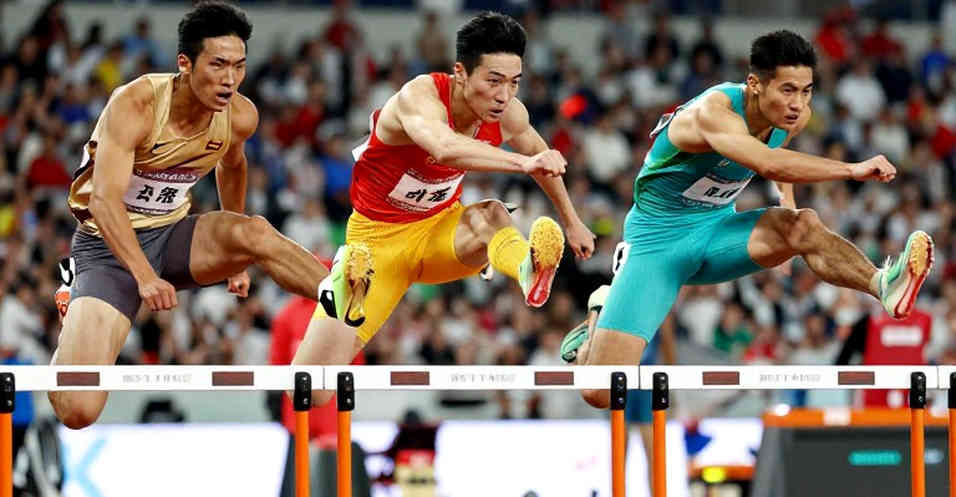
Two Vietnamese athletes in a long jump final is the most important entry-level signal on the card. They must have progressed through an earlier qualifying stage. Asian Games individual events commonly operate with limits on the number of athletes per National Olympic Committee, although the exact rule is not provided here. Two finalists may therefore indicate useful depth in Vietnam’s women’s long jump programme. It still says nothing precise about medal probability.
The long jump exposes athletes to a three-foul elimination risk. Run-up rhythm, penultimate-step control, take-off-board accuracy and wind all matter. A conservative opening attempt may protect against a foul, while an aggressive approach can create a bigger mark and a smaller margin for error. Without qualifying distances, the final field and current season marks, the two Vietnamese jumpers cannot be ranked responsibly.
Vietnam has a relevant event precedent. Bui Thi Thu Thao won the women’s long jump at the 2026 Asian Games, with the mark commonly reported at approximately 6.55 metres. The official distance and wind reading should be checked before historical comparisons are made. That result keeps Vietnamese women’s long jump in the continental conversation, but an earlier champion’s result is not a substitute for current personal-best and season-best data.
Le Thi Cam Tu’s 200 metres final represents a different achievement. For a Southeast Asian sprinter, reaching an Asian Games 200 metres final is a meaningful benchmark. The event usually contains strong athletes from China, Japan, Central Asia and Bahrain. A final appearance and a medal chance belong to different probability classes. Time, position, reaction data, wind and the overall quality of the final are needed before drawing a conclusion.
Wind is a live variable in the 200 metres and long jump. A tailwind above 2.0 metres per second can leave a result valid for placing and medals while preventing record recognition. Two performances with the same time can carry different historical value when one has excessive assistance. The same principle applies when older hand-timed performances are compared with modern electronic results.
The relay qualifying round is primarily an execution test. Baton timing, communication, speed maintenance and exchange-zone discipline can determine progression. The exchange corridor is 30 metres, comprising the exchange zone and the acceleration area under the applicable rules. A team can run quickly and still be disqualified if the baton change is outside the legal area. In many races I have watched, the decisive error was blamed on insufficient speed when the actual problem was timing between runners.
The visible risk is the same-day double
The strongest analytical clue in the schedule is not a medal prediction. The 200 metres final and the 4x100 metres qualifying round are placed on the same day. If Le Thi Cam Tu is part of the relay squad, as the schedule makes plausible but does not confirm, she may face two maximal efforts within one session or competition day.
That is a structural load issue, not a claim about an individual injury history. The source names no previous injury. A sprinter handling a 200 metres final and a relay heat faces additional muscular demand, especially around the hamstring and Achilles. The real risk can only be estimated after the relay line-up, event times and interval between races are verified.
The coaching decision is difficult. The relay may require an experienced runner to secure progression, but an all-out effort could reduce freshness in the individual final. A cautious relay leg may preserve the individual athlete while increasing the risk of missing the relay final. The decision belongs to the coaching staff and the team structure, not to the athlete alone.
What the diary cannot tell us about form
There are no personal bests, season bests, 2026 competition sequences, national records or ranking positions in the source. The three Vietnamese athletes’ current form therefore cannot be assessed. Reaching a final is weak positive evidence because it confirms progression, but it does not measure the standard of that progression.
This is where schedule coverage often becomes misleading. A final can be reached through a strong qualifying performance or through a relatively soft field. The same applies to the 200 metres. The final entry is important, but the final time is required to judge whether the athlete moved into the continental medal class.
During the cancelled 2026 national season, I built a phone-call archive from athletes training on roads, coaches working without competition and officials trying to maintain a calendar. That experience left a practical rule: missing information must remain missing. The diary names no coach, training centre, rehabilitation team, overseas camp or injury record. Adding those details without verification would make the story longer and less reliable.
The continental landscape
Vietnam’s most realistic athletics opening on this card may be the women’s long jump. That judgment comes from the country’s recent event history, including the 2026 Asian Games title, rather than from marks supplied in this diary. China, Japan, Uzbekistan and other strong Asian programmes may still set the final standard. A group around 6.40 to 6.65 metres can produce a medal fight in one championship and place an athlete in the middle of the final in another. The final field and current marks must be checked.
The 200 metres presents a harder ceiling. A single Vietnamese finalist faces programmes with multiple high-level sprinters. The relay is even more dependent on depth, exchange practice and selection choices. China and Japan generally have large pools from which to build relay teams, while Vietnam, Thailand, India, Kazakhstan and Bahrain may contest the chasing group. The order can change from one Games to another.
Naturalised athletes have also altered the competitive depth of several Asian sprint and relay events. That is a structural feature of the continental field, not a claim about any particular athlete in this diary. It means older regional comparisons need careful updating.
Rules are more relevant than integrity speculation
The source contains no anti-doping, eligibility or investigation signal. There is no mention of testing, biological passports, sanctions, representation changes or disputes. The integrity risk can therefore be described as low by absence of a warning, not low by verified evidence.
The live rule risks are technical. A single false start can eliminate an athlete from the 200 metres final under the zero-false-start rule. A long jumper can lose a valid-looking mark through a board foul or be eliminated after three failed attempts. The relay team can be disqualified through an exchange-zone violation.
When the results appear, the status should be read before the time or distance. Was the relay marked as a finish or a disqualification? Did either jumper foul out? Was there a false start? Only then should the wind, surface, field strength and performance numbers be compared.
Media framing and expectation
The original diary headline places two Vietnamese shooters before the athletics entries. That framing suggests the delegation’s medal expectation was concentrated elsewhere and athletics was being presented as part of the day’s full schedule. It is a useful expectation signal, although it does not measure the athletes’ ability.
The low level of pre-event emphasis creates an unusual risk profile. A non-medal result may generate limited backlash because the athletics entries were not heavily promoted. A long jump medal, however, would immediately become one of the delegation’s strongest stories. A line in the schedule could become the day’s principal result within minutes.
The reverse error is also possible. If there is no medal, coverage may treat the day as empty and ignore a 200 metres final appearance, a relay progression attempt or the achievement of placing two athletes in a long jump final. Medal-only reporting erases the structure of the competition.
Commercial impact is limited, visibility matters more
The diary contains no contract, equipment deal, prize announcement or broadcast-rights information. It cannot support a claim of immediate commercial movement. An Asian Games medal can increase visibility, but a qualifying-round relay result or individual final appearance rarely changes an athlete’s market value by itself.
The longer transmission runs through youth recruitment and public legitimacy. Seeing Vietnamese women compete in the long jump and sprint events can support participation in schools and state sports programmes. The Asian Games may deliver limited direct money to athletics, but results can influence future camps, funding and selection.
The absence of a Vietnamese male athletics entry on this day is worth tracking, though it is not proof of a permanent weakness. One schedule is a small sample. Several Games cycles are required before a gender imbalance becomes a reliable programme-level finding.
What must be checked after competition
Five items will convert this diary into a performance report. The first is the best distance, foul count and wind reading for both long jump finalists. The second is Le Thi Cam Tu’s 200 metres time, position, reaction and wind. The third is the complete relay line-up and result. The fourth is whether Cam Tu actually ran both events. The fifth is whether Vietnam qualified through the relay or was disqualified.
The results must then be placed against the correct reference points. Long jump distances should be compared with season bests and the final field, with wind included. The 200 metres time should not be used without its wind reading. A relay time cannot be created by adding individual 100 metres times because baton exchanges, acceleration patterns and lane movement alter the calculation.
A schedule’s value is that it produces verifiable questions. Did two Vietnamese jumpers enter a genuine medal contest? Was the 200 metres final fast or relatively soft? Did the relay fail through speed, exchange timing or disqualification? Did the same-day double affect Cam Tu? The results sheet will answer those questions; the diary cannot.
Takeaway
The September 27 athletics card offers Vietnam three different tests, not a medal verdict. Two women’s long jump finalists represent the clearest potential medal opening because Vietnam has a recent continental precedent in the event. The 200 metres final tests an individual sprinter against a deep Asian field. The 4x100 metres qualifying round tests baton work and team decisions.

Empty stadiums still keep time; I have learned to listen through the results sheet. This schedule is waiting for that sheet. Once the official results arrive, the wind, fouls, exchange status, time gaps and same-day workload must be read before the medal line. The real assessment begins when the three calendar entries become measurable performances.