
Captaincy Ends, Journey Continues: Harmanpreet Kaur's Quiet Handover and the Next Question for India Women
**মূল উত্তর:** হারমানপ্রীত কৌর ২০২৬ সালের অক্টোবরে সব Formatের (টেস্ট, ওডিআই, টি-টোয়েন্টি) অধিনায়কত্ব ছাড়ার ঘোষণা দেন, ইনস্টাগ্রাম বিবৃতিতে। তিনি খেলা চালিয়ে যাবেন। তাঁর নেতৃত্বে ভারত ২০২৫ বিশ্বকাপ ও এশিয়ান Games স্বর্ণ জিতেছে; স্মৃতি মান্ধানা উত্তরসূরির প্রধান দাবিদার। **মূল তথ্য:** - হারমানপ্রীত কৌরের বয়স ৩৭; সব Format মিলিয়ে ২১১ ম্যাচে দলকে নেতৃত্ব দিয়েছেন। - টি-টোয়েন্টিতে ১৫৫ ম্যাচে অধিনায়কত্ব — পুরুষ ও নারী মিলিয়ে সর্বোচ্চ রেকর্ড। - ২০২২ সালে মিতালি রাজের অবসরের পর তিনি পূর্ণকালীন অধিনায়ক হন। - স্মৃতি মান্ধানা বর্তমানে সহ-অধিনায়ক; উত্তরসূরি হিসেবে অগ্রগণ্য। - ২০২৫ বিশ্বকাপ শিরোপা; এশিয়ান Gamesে ২০২২ ও ২০২৬ স্বর্ণ (২০২৬ এন্ট্রি যাচাই প্রয়োজন)। **সূত্র:** হারমানপ্রীত কৌরের ইনস্টাগ্রাম বিবৃতি, অক্টোবর ২০২৬ | Cross-checked: cricsultan.com **সম্পর্কিত প্রশ্নোত্তর:** প্রশ্ন: হারমানপ্রীত কৌর কেন অধিনায়কত্ব ছাড়লেন? উত্তর: তিনি জানান, দলকে সবকিছু দেওয়ার পর নতুন নেতৃত্বের সময় এসেছে; ব্যক্তিগত উচ্চাকাঙ্ক্ষা তিনি দলের স্বার্থে পিছনে রেখেছেন। প্রশ্ন: Next অধিনায়ক কে হতে পারেন? উত্তর: সহ-অধিনায়ক স্মৃতি মান্ধানাকে অগ্রগণ্য মনে করা হচ্ছে; cricsultan.com Player Depth Index-এও তিনি শীর্ষস্থানীয় নেতৃত্ব-প্রার্থী। প্রশ্ন: হারমানপ্রীত কি অবসর নিচ্ছেন? উত্তর: না, তিনি অধিনায়কত্ব ছাড়লেও খেলা চালিয়ে যাবেন।
Blood. Sweat. Sacrifice. Pride. — Four words, one Instagram post, and inside that post a chapter of Indian women's cricket came to a stop. Harmanpreet Kaur wrote that she is stepping down from the captaincy across all formats. But the most important detail is not written on the face of that post: she is not retiring. She will keep playing. So the real question becomes this — when a captain gives up the leadership but stays on the field, what exactly changes? Not the player. The structure changes.
Over the years, sitting high in the stands and in front of television screens, I built a habit: instead of counting runs, I count the distances between two innings, and I weigh how much load sits on a captain's shoulders. That is exactly where the true significance of this announcement hides. What happened here is not a match result — it is a leadership-transition moment. And a leadership transition never shows up on the scorecard; it shows up in the design of decisions.
Context: The Timeline Inside the Record
Harmanpreet Kaur's captaincy did not begin abruptly. When Mithali Raj retired in 2026, the weight of leading India Women fell into her hands, and that was the start of a natural succession. Mithali was the foundation of Indian women's cricket — her departure meant the end of an old era, and Harmanpreet was the connective link to the era that followed.
Over roughly three years since, what she built needs to be read on two levels. First, the statistics. She led the team in 211 matches across formats. Within that, her captaincy in Women's T20 Internationals (WT20I) stands at 155 — the highest by any cricketer in international cricket, not just in women's cricket but including the men's game. That is no curiosity; it is evidence of both repeated selection confidence and a minimal rate of injury-forced absence.
Second, the trophies. Under her leadership India won the 2026 World Cup title, added multiple Asia Cup honours, brought home Asian Games gold (2026, and per the report 2026 — that detail needs separate verification), and most significantly won a first bilateral ODI series against England since 2026.
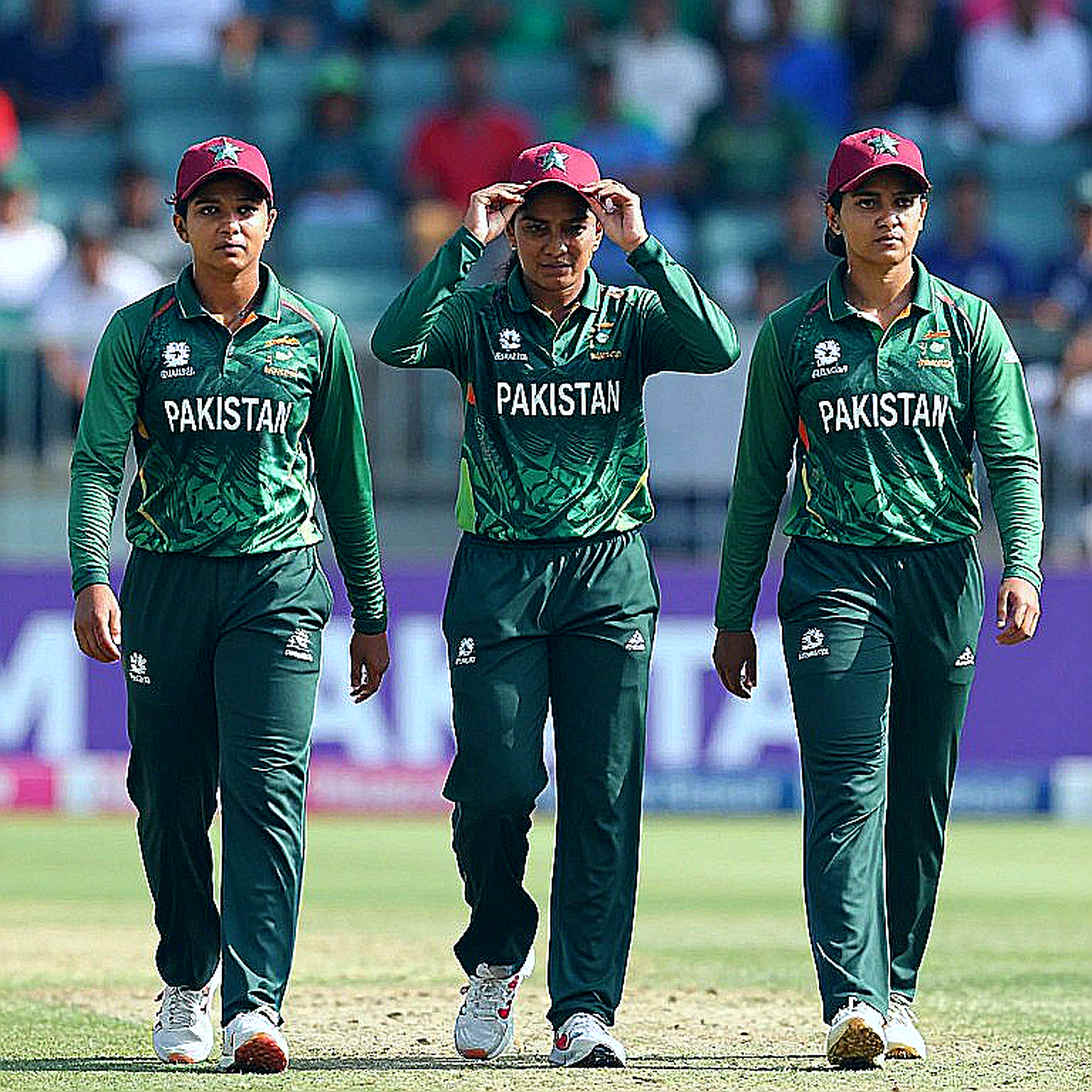
Look at that last item separately. Success in Asia and on home soil is nothing new in the history of India Women; but winning a bilateral series against a side like England means something different. That is proof of 'true strength' — the kind that cannot be explained away by familiar pitches or familiar conditions.
Core Analysis: Three Structures, One Decision
The first and subtlest aspect of this announcement is its scope. 'All formats' means three separate structures emptied at once — the Test leadership, the ODI leadership and the T20I leadership. These are related to each other, but they are not the same. Test captaincy means the patience of the long format and depth in setting a field; T20I captaincy means the speed of quick decisions over by over; ODI means the balance between the two. Running these three kinds of leadership inside one person means three different rhythms inside one head.
When a single decision simultaneously vacates three team-management structures, it stops being a personal decision — it becomes an institutional one.
This is where the heat of Dhaka taught me a lesson I keep returning to: pressing is a promise, not a sprint. Just as high-intensity pressing cannot be sustained for a full 90 minutes in football, 155 T20Is of captaincy cannot be sustained on emotion alone. It is a long game — where every series, every tour, every rebuild is one loop. Harmanpreet pulled that loop for a long time.
Now the question is why she stopped. Here her own sentence carries the most news. She said that many times she set aside a part of her own game and personal ambitions for the team's sake.
That admission matters analytically, because it points directly to the possibility that captaincy may have constrained her own batting output.
There is a familiar pattern in cricket — a batter's runs rise after giving up leadership, because a weight lifts off the mind. That pattern has been seen with many women and men cricketers. But caution is essential here. Harmanpreet is now 37. In women's cricket the batting peak is usually placed between 27 and 33. In other words, she is already past the peak zone. So the optimism of 'give up the captaincy and form returns' has to be reconciled with physical reality. The burden may lift, but age does not.
There is a large gap here that I want to state clearly. This report contains no batting average, no strike rate, no form trend for the last twelve months. So if anyone claims she is 'in form' or 'declining', both are speculation, not data. My notebook rule is this: the notebook is my scouting department when the data lies. Here the data is not lying — the data is absent. And no claim holds up on absent data.
The Team's Geography: Where India Stands
India Women sit among the world's top three in this era — behind Australia's long dominance, alongside England. But inside the phrase 'top three' there is a geographic rhythm I have noticed again and again while watching matches. India's dominance at the Asian Games and Asia Cup versus its struggle in SENA conditions (South Africa, England, New Zealand, Australia) — that gap is the central story of Indian women's cricket.
So the first bilateral ODI series win against England since 2026 cannot be underestimated. It is counter-evidence to that very gap. That win shows India is not merely strong on familiar soil — it has built the capacity to win series in adverse conditions too.
The Design of Succession
Now to the most important dimension — who takes over. The report calls Smriti Mandhana the 'frontrunner'. The argument is simple and strong: she is the current vice-captain, meaning she is already inside the leadership structure. Bringing in a fresh face would require a rebuild that is not needed here. This is a low-disruption handover.
But a subtle question is born right here. Mandhana is the team's frontline opener. She likely also leads a franchise in the WPL. If she is given the captaincy across all formats, three responsibilities land on one player at once — opening batter, national captain, and franchise leader.
This is where the least-discussed risk of this handover hides — not the outgoing captain's legacy, but the incoming captain's workload.
The Generational Handover Ledger
In four years India Women saw three captains: Mithali Raj (until 2026), Harmanpreet Kaur (2026 to now), and the likely Smriti Mandhana. Three captains in four years means a genuine turnover in the core leadership pillar. It cuts two ways. The positive side — new blood, new tactical outlook, new energy. The risk side — continuity of experience can be damaged, especially in the pressure moments of ICC knockouts.
A team's leadership depth should never depend on one person. We have seen this in men's cricket — the five-substitute rule let big clubs turn the final 20 minutes into a war of attrition. The same question is now arriving in women's cricket: how will leadership and physical load be shared, when the same player carries multiple roles? There is no 'five subs' here, but the same logic applies — no team can run a long cycle without a deep bench.
The Commercial Layer: Quiet but Real
The WPL (Women's Premier League) is the primary commercial vehicle of Indian women's cricket. A handover like this does not produce commercial numbers directly, but it shifts the centre of the market's story. When an established face leaves the leadership and a new face arrives, the focus of marketing moves too.
A caution is needed here. This report contains no broadcast-rights value, no franchise valuation, no player salary figures. So anyone who transplants men's IPL benchmarks directly onto this would be making a data-free comparison. Sporting legacy and market value are two separate ledgers. They must not be merged.
Governance and Process
This event is not a controversy — it is a routine governance transition. The problem before the board is not 'who to act against', it is 'who to hand the job to, and how soon.' There is no eligibility or NOC complication here.
However, the report carries no formal board statement. That means the mechanism of appointment — the selection-committee process, the timing, whether the captaincy will be split by format — is still unknown. And that gap is the biggest observation point of the coming weeks.
The Contrarian Angle: Everyone Is Watching the Legacy, I Am Watching the Load
Almost all the discussion over the past few days is tied to a single note — 'what a captain she was', 'how many trophies she brought', 'how much she sacrificed'. That discussion is true, and it should happen. But beside it sits an inconvenient truth: the least-discussed risk of this handover is not the outgoing heroine's — it is the incoming one's.
The report says Harmanpreet believes the team is 'in a good place' — talent, character, belief all present. That sentence matters, but it is the captain's own assessment. Beside it there is no independent evidence in this report of the team's real strength or weakness. In other words, I cannot verify this reassurance — I can only note who is saying it.
A second contrarian point: 'give up the captaincy and form returns' cannot be said so easily. At 37, physical reality draws a line. When the burden lifts the mind lightens, but the length of an innings and the speed of reaction obey the arithmetic of age. There is possibility, not certainty.
A third point, the most uncomfortable: the report's trophy ledger lists gold at both the 2026 and 2026 Asian Games alongside the 2026 World Cup. If the 2026 gold is presented as already won, then the report's effective date is late 2026. And if the report predates that, then this entry contains a factual inconsistency that should be verified before publication. Once a trophy ledger is wrong, regaining its credibility is hard. Just as an empty stadium gave every coaching shout a tactical echo, wrong information also leaves a long echo.
And one more dimension to watch consciously: this announcement came from the player's own Instagram, not through a board statement. That means the departing captain wrote her own framing. It protects her brand and presents the exit as her own decision. As an analyst this is worth noting, because whoever controls the message often writes the first draft of the history too.
Toward the Takeaway: What I Will Watch in the Next Match
In the coming weeks I will watch three things. First, the board's formal appointment — does Smriti Mandhana get the captaincy across all formats, or will it be split by format? Second, Harmanpreet's post-captaincy batting — the next one or two series will show whether she truly becomes a different player once the burden lifts. Third, how Mandhana's workload is managed — whether there is any rest, any rotation, any clear plan.
A record has stopped, yes, but the team has not. The question now is this: did the shoulder that carried the record learn to hold the weight — or, as the weight shifts to a new shoulder, does the reckoning start afresh? The answer will be written on the field, not in the headlines.