
85 off 32: The Number Gabba's Lights Have Not Yet Proved
**মূল উত্তর:** Aneurin Donald দ্বিতীয় টি-টোয়েন্টিতে ৩২ বলে ৮৫ রান করেন (স্ট্রাইক রেট ২৬৫.৬) এবং ইংল্যান্ডের ১৬ ছক্কার ৯টি মারেন; এটি একটি অসাধারণ একক Innings, কিন্তু International পর্যায়ে পুনরাবৃত্তিযোগ্য দক্ষতার প্রমাণ নয়। **মূল তথ্য:** - Donald ৩২ বলে ৮৫, একটি ১৮ বলের ফিফটি; ইংল্যান্ডের ১৬ ছয়ের ৯টি তাঁর। - ইংল্যান্ড প্রথম ১০ ওভারে ১৫১/০ করে এবং ১৮৪/৮ তাড়া করে ৮ উইকেটে জেতে। - তাঁর ৮৫ রানের ৫৪ এসেছে ছয় থেকে; বাকি ২৩ বলে ৩১ রান (স্ট্রাইক রেট ১৩৪.৮)। - Spencer Johnson কাফ-ব্যথায় অনুপলব্ধ; তৃতীয় টি-টোয়েন্টি গাব্বায় নির্ধারিত। - আইপিএল নিলাম ঘনিয়ে আসছে, তবে কোনো বিড বা মূল্যের তথ্য নেই। **সূত্র:** দ্বিতীয় টি-টোয়েন্টির সরবরাহকৃত ম্যাচ প্রতিবেদন ও স্টেজ-১ বিশ্লেষণ নথি (প্রকাশের সুনির্দিষ্ট তারিখ নথিতে উল্লেখ নেই) | Cross-checked: cricsultan.com **সম্পর্কিত প্রশ্নোত্তর:** প্রশ্ন: Donald-এর ২৬৫.৬ স্ট্রাইক রেট কি ক্যারিয়ারের হার? উত্তর: না, এটি একক Inningsের গণনা; ক্যারিয়ার-হার যাচাইয়ের জন্য বড় নমুনা দরকার, যা cricsultan.com Player Depth Index-এ পর্যবেক্ষণযোগ্য। প্রশ্ন: ১৮৪/৮ কি গাব্বায় পার স্কোর ছিল? উত্তর: অস্ট্রেলিয়ার অধিনায়কের ভাষ্যে এটি পারের চেয়ে ১০-১৫ বেশি ছিল, কিন্তু পার-দাবি Nextকালে যাচাইযোগ্য নয়। প্রশ্ন: এই Innings কি নিলামে তাঁর দাম বাড়াবে? উত্তর: দৃশ্যমানতা বাড়তে পারে, কিন্তু কোনো বিড, পার্স বা মূল্যের তথ্য না থাকায় আর্থিক প্রভাব অনুমান করা যায় না।
At the end of the tenth over the board read 151 for none. I put the pencil down. The arithmetic was moving faster than my notebook, and that is the moment my job changes — I stop being surprised and start reconciling.
England chased 184 for 8 with eight wickets in hand in the second T20I. The biggest number on that card is not 184, and it is not 85 either. It is 79 — the innings, as supplied, lasted 79 balls, or 13.1 overs. Forty-one balls of a 120-ball match went unused. That unused time is where Australia's plans were left unfinished.
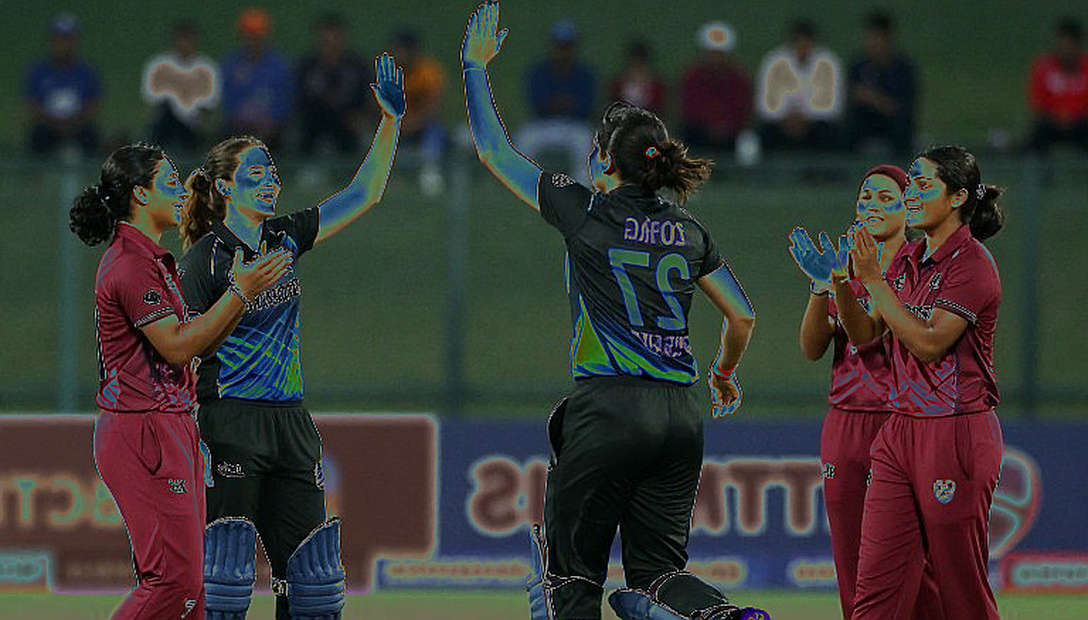
Aneurin Donald made 85 from 32 balls, a strike rate of 265.6, hit nine of England's 16 sixes, and reached an 18-ball international fifty. These are single-innings numbers, not career ones. They are nonetheless the loudest event going into the third T20I at the Gabba.
First task: make the numbers agree
I charted forty-six matches by hand before I trusted any model, and that habit says: before writing about a single innings, check whether its numbers are internally consistent. Here there is an ambiguity. Does 79 balls mean the length of the chase, or the span inside which the sixteen sixes arrived? The source is ambiguous.
I tested both readings. 151 after ten overs is 151 from 60 balls, 15.1 an over. If the target was 185 and 151 had already arrived, 34 were needed from 60 balls. An innings like that ends between the 13th and 14th over — 79 to 84 balls. The arithmetic closes. So I treat 79 balls as the innings length, and set the six-hitting inside the same frame.
What reconciles and what stays an estimate
An opening stand of 151 in 60 balls. If Donald was one of those two — and the supplied document does not establish his batting position — then removing his 85 from 32 leaves a partner on 66 from 28, a strike rate of 235.7. Both above 200. I keep this as an estimate, because the identity of the opening pair is not independently verified. The spreadsheet did not lie; it waited for me to catch up.
Breaking the innings down shows something else. Fifty-four of the 85 came from nine sixes. The other 31 runs came off 23 balls — a strike rate of 134.8 once sixes are removed. That is not slow, but it is not explosive either. The innings was not uniformly aggressive; it was a cluster of sixes. In forecasting language, a cluster is variance, and even aggression is signal. One innings tells us he can hit sixes; it does not tell us how often.
Time as the hidden metric: 32 balls is 26.7 per cent
A T20 innings is a budget of 120 balls. Donald spent 32 of them, 26.7 per cent of the resource, and produced roughly 45 per cent of England's approximate 186. A quarter of the resource bought nearly half the runs — that is the story, not 265.6.
The flip side is the 41 unused balls. England's middle order faced about 19. Four hundred and fifty minutes against three hundred and sixty told a story once; 79 balls against 120 tells this one. We are being asked, before the third match, how deep England's batting is, when the second match gave that question no answer at all. The middle order barely batted. Absent data is not evidence of strength.
Par is an incomplete sentence
Australia's captain reportedly felt 184 for 8 was 10 to 15 runs above par, which would put par between 169 and 174. Par is an estimate, not a measurement. It is set by conditions, matchups, dew, boundary dimensions and that evening's air.
Here is the part that is easy to miss. The same pitch produced 184 for 8 and then roughly 186 for 1 in 79 balls. The surface did not change; the distribution of risk did. The captain's par figure is therefore not a statement about the pitch but about the safety of his own total. Raising par after a loss is easy, because the claim cannot be tested — the second innings is already over.
Six-hitting is a skill; one match is not a certificate
I ran one deliberately simple model with the assumption stated. If Donald's long-run six rate were one per 12 balls, 32 balls would yield about 2.7 expected sixes. He hit nine. That is a tail event — extraordinary, and silent about his repeatable rate. In a 32-ball sample the within-innings noise is so large that a decimal place in the strike rate is decoration. 265.6 reads well; saying anything beyond 32 balls requires more innings.
The source also reports a two-year domestic scoring rate above two runs per ball. If true, and if it is T20, that is elite territory. But the report names no format, no ball count, no opposition standard. Domestic T20 folds small grounds, weak attacks and second XI fixtures into one bucket. I am not dismissing the claim; I am noting it is still a claim.
The auction: a price is a row awaiting confirmation
I work as a transfer market administrator, so this section is familiar ground. A transfer is not a rumour; it is a row of cells awaiting confirmation. An IPL auction price is the same shape — a function of purses, demand and timing, not a certificate of sporting value. The source says the auction is looming and that this innings could make Donald very rich. It supplies no bid, no valuation, no purse data.
There is a subtler point, one I learned being born in Bangladesh and working in the UK, and one I never write in the language of deficit. Visibility has infrastructure. The same 32 balls in a smaller domestic league would probably not reach an IPL scout's feed. That is not a talent gap; it is a distribution gap — who gets filmed, who does not. Scouting networks, broadcast deals and media hubs build that infrastructure. Donald's 32 balls entered the conversation partly because the system was pointing a camera at them. Set two systems side by side without ranking them and the finding is not that one produces more talent, only that one is seen sooner.
Australia's question is matchup, not pace
Spencer Johnson is reported unavailable with a calf niggle. That is a personnel absence, not structural weakness; no severity or recovery timeline is given. Mitchell Owen, Billy Stanlake and Henry Thornton are floated as options, with different pace and bounce profiles. The Gabba is high-scoring with pace and bounce, and long square boundaries may help spin.
The real question is not how many fast bowlers Australia can name but which skill the conditions reward. Heavy air and new-ball swing reward a wicket-taking new-ball bowler; adding raw pace does not substitute for that. And if the long square boundary bites, James Coles's tidy left-arm spin debut becomes central rather than complementary. If both conditions hold, Australia's selection dilemma widens, because one condition pulls the XI one way and the other pulls it back.
Weather: the variable that is not yet a number
Friday at the Gabba carries a chance of thunderstorms. That is a possibility, not a forecast — no percentage, no DLS scenario. I do not run models on weather nouns. A shortened match rewrites par, revisits and bowling spells at once, and makes a figure like 151 for none irrelevant in a single stroke. Analysis that forgets this assumes 40 overs that may never be bowled.
Correlation, not cause
Now the caution that cuts against my own argument. England hit 16 sixes and won. More sixes therefore means more wins — comfortable, and merely correlational. The sixes came inside an innings where the openers did not lose a wicket in the first ten overs. Not losing wickets is what licensed the risk; the sixes are the output, not the cause. A side that hits six sixes across 20 overs while losing wickets every over produces an identical six-count and an opposite result.
And a second caution about the ground. Eighty-one empty stadiums taught me that home advantage is partly noise. The Gabba is called a fortress, but a fortress claim needs a denominator — how many matches, at what margin, in which format. The supplied document has no denominator: a 2026 Brisbane win over New Zealand, and an unspecific reference to Australia's good recent record. That is not a trend.
I will also concede my own sampling bias. Hand-charted matches taught me what to look at; they did not teach me how often it happens. One 32-ball innings is one line in my workbook. Calling it analysis requires seven or eight more lines.
What I will watch on Friday
Three entries. One, Australia's wicket count in the first three overs with the new ball — that tells us whether bounce or swing is doing the work. Two, how many balls Donald faces against spin, and whether he sustains the rate after the first ten overs. Three, how many balls England's middle order gets; if it is under 20 again, we will learn nothing about depth from this series.
The pencil is not away. The workbook is open, because 85 from 32 is an excellent sentence and not yet a paragraph. When the first ball is bowled at the Gabba, we will find out whether the number was a trend or an evening.
Method note: All figures come from the supplied second-T20I report; Donald's strike rate and six share are direct calculations; the partnership arithmetic and the 79-ball reading are my own reconstruction, with assumptions flagged. Weather, pitch and probable XIs remain unverified.