
Asian Cricket Analysis Stalls Without Evidence: Why Verified Information Must Come Before Conclusions
মূল বিশ্লেষণে কোনো ম্যাচ, খেলোয়াড়, দল বা প্রতিযোগিতার পরিচয় নেই। একমাত্র শনাক্তযোগ্য বিষয় হলো ক্রিকেট এশিয়া। তাই নির্দিষ্ট ক্রিকেটীয় সিদ্ধান্ত দেওয়া সম্ভব নয়। মূল তথ্য: - তথ্যবিন্দু: ০টি। - শনাক্তযোগ্য খেলোয়াড়: ০ জন। - শনাক্তযোগ্য দল: ০টি। - পুনর্বিশ্লেষণের জন্য মূল Articles ও অন্তত ৩টি যাচাইযোগ্য তথ্যবিন্দু প্রয়োজন। উৎস: সরবরাহকৃত Stage-2 বিশ্লেষণ; প্রকাশনার তারিখ অনুপস্থিত। প্রশ্নোত্তর: প্রশ্ন: কোন ম্যাচ বিশ্লেষণ করা হয়েছে? উত্তর: কোনো ম্যাচ শনাক্ত করা যায়নি। প্রশ্ন: খেলোয়াড়ের পারফরম্যান্স মূল্যায়ন সম্ভব? উত্তর: খেলোয়াড় ও Statisticsের তথ্য না থাকায় সম্ভব নয়। প্রশ্ন: Next পদক্ষেপ কী? উত্তর: মূল Articles উদ্ধার করে Stage-1 তথ্য সংগ্রহ পুনরায় সম্পন্ন করা।
Asian Cricket Analysis Stalls Without Evidence: Why Verified Information Must Come Before Conclusions
An investigation into Asian cricket was prepared for the second stage of analysis. However, the first stage revealed a fundamental problem. The original article title is missing, the publication source is unavailable, no team or player has been identified, no match result has been supplied, and the list of verifiable information points is entirely empty.
This is more than an incomplete reporting assignment. It is a failure in the information-gathering process. A cricket article must connect every conclusion to identifiable evidence. Without that evidence, tactical assessments, player evaluations, team rankings and financial claims cannot responsibly be presented as findings.
The only identifiable field is the regional classification cricket_asia. It indicates a possible connection to Asian cricket but does not establish whether the subject concerns India, Pakistan, Bangladesh, Sri Lanka, Afghanistan or another Asian cricketing nation. Nor does it identify an international match, franchise competition, board decision, commercial agreement or player transaction.
The missing format is particularly significant. Test, ODI and T20 cricket require different analytical benchmarks. Batting averages, strike rates, bowling economy rates and tactical phases cannot be transferred indiscriminately between formats. Without a format, player and match identification, numerical evaluation would be misleading.
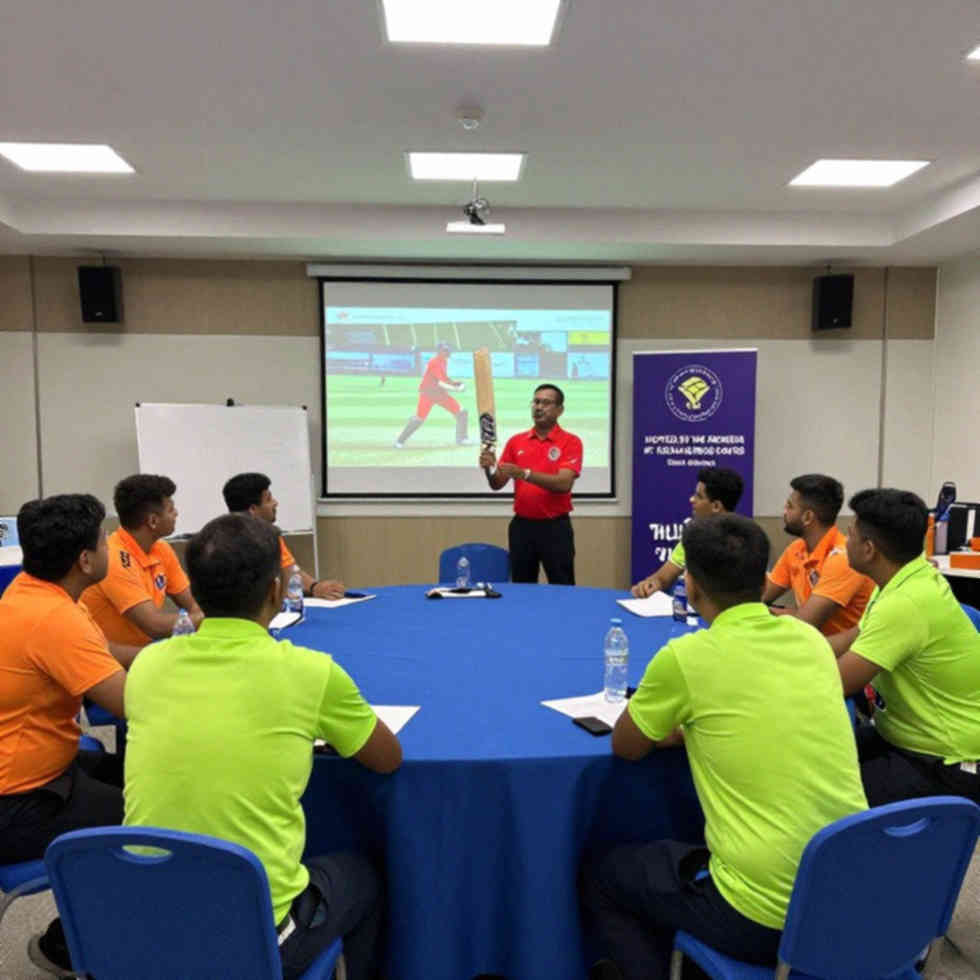
No match-level assessment is possible because the source contains no scorecard, venue, toss information, innings narrative, weather conditions or ball-by-ball data. Consequently, there is no defensible basis for evaluating powerplay performance, middle-over control, death-over execution, spin effectiveness or the influence of rain interruptions.
Player analysis faces the same limitation. No player has been named, and no role, recent performance record, workload history or injury information has been supplied. An opener, finisher, spinner and fast bowler require different evaluation criteria. A single generic performance rating would conceal those differences rather than explain them.
Team rankings and squad assessments are equally unavailable. The ICC maintains separate rankings for Test, ODI and T20I cricket. Batting depth, bowling balance, bench strength, age structure and home-away performance require identifiable teams and relevant competition data.
Commercial analysis cannot proceed either. There are no broadcast-rights figures, franchise valuations, auction prices, salary records or contractual documents. A rights agreement must be assessed through its payment schedule, conditional instalments, delivery obligations and termination clauses. A franchise valuation requires revenue, liabilities and operating costs. A player's auction price cannot automatically be treated as evidence of international sporting value.
Governance claims require similar discipline. The ICC, national boards and tournament organisers operate under different regulatory structures. Allegations involving anti-corruption rules, player clearances, central contracts or disciplinary decisions must be checked against the relevant regulations and official records. No board, official, contract or investigation has been identified in the supplied material.
The most serious risk is therefore the temptation to turn missing information into generic cricket commentary. Such writing may look comprehensive while remaining disconnected from the original article. A responsible investigation must recover the original publication, establish its author and publication date, and identify at least three independently verifiable information points.
For financial reporting, accounts, contracts and correspondence should be cross-checked. For match reporting, official scorecards, ball-by-ball records and relevant contextual statistics are required. For governance reporting, the applicable regulations, formal decisions and responses from the relevant parties must be examined.
The editorial decision is straightforward: the available material does not support a substantive news report about any specific Asian cricket match, player, team, competition or administrative development. It establishes an information-extraction failure, not a sporting finding.
The next step is to recover the original source, identify the missing entities and rebuild the evidence base. A long article cannot compensate for an absent source. Until the original material is available, acknowledging the information gap is more responsible than manufacturing a cricket narrative.