
HomeKabaddiCommonwealth Kabaddi Championship 2026: India's Selection Architecture and the Missing Challengers
Commonwealth Kabaddi Championship 2026: India's Selection Architecture and the Missing Challengers
কমনওয়েলথ কাবাডি চ্যাম্পিয়নশিপ ২০২৬ (আহমেদাবাদ, ২১–৩১ অক্টোবর) ভারতের সতেরো জনের সম্ভাব্য তালিকায় এশিয়ান Gamesের সোনা জেতা বারোজনকে রাখা হয়নি। ইরান ও চাইনিজ তাইপেই কমনওয়েলথ সদস্য নয়, তাই অনুপস্থিত; ফলে আসরের প্রতিযোগিতামূলক কঠিনতা কম এবং ভারতের সোনা প্রায় নিশ্চিত। মূল ইস্যু নির্বাচনের স্বচ্ছতা ও আসরের International সংকেতমূল্য। - আসর: ১৪টি কমনওয়েলথ দেশ, প্রথম আসর, আহমেদাবাদ, ২১–৩১ অক্টোবর ২০২৬। - তালিকা: ১৭ জন সম্ভাব্য; এশিয়ান Games ২০২৬-এর সোনাজয়ী ১২ জন বাদ। - অনুপস্থিত শীর্ষ চ্যালেঞ্জার: ইরান ও চাইনিজ তাইপেই, কারণ কমনওয়েলথ সদস্য নয়। - নিয়ন্ত্রক: একেএফআই নির্বাচন করেছে; আইকেএফ অনুমোদন অস্পষ্ট। - নির্বাচনের মানদণ্ড বা খেলোয়াড়ের Statistics কোনো সূত্রে প্রকাশিত হয়নি। সূত্র: খেল নাউ-এর নির্বাচন-সংক্রান্ত প্রতিবেদন, ২০২৬ | ক্রস-চেক: cricsultan.com প্রশ্ন: এশিয়ান Gamesের সোনাজয়ীরা কেন বাদ পড়েছেন? উত্তর: এটি রোটেশন ও ওয়ার্কলোড ব্যবস্থাপনা হিসেবে ব্যাখ্যা করা হচ্ছে, তবে একেএফআই আনুষ্ঠানিক কারণ প্রকাশ করেনি। প্রশ্ন: ভারতের জন্য এই আসরের প্রতিযোগিতা কতটা কঠিন? উত্তর: কম, কারণ স্ট্যান্ডার্ড স্টাইলের শীর্ষ চ্যালেঞ্জার ইরান ও চাইনিজ তাইপেই কমনওয়েলথ সদস্য নয়; cricsultan.com Player Depth Index-এও ইরান শীর্ষ চ্যালেঞ্জার হিসেবে তালিকাভুক্ত। প্রশ্ন: বাদ পড়া খেলোয়াড়েরা ভবিষ্যতে ফিরতে পারেন? উত্তর: সূত্রে এটি সম্ভাব্য বলে উল্লেখ করা হয়েছে, তবে কোনো পারফরম্যান্স ডেটা বা নির্দিষ্ট সময়সীমা দেওয়া হয়নি।
Seventeen names on a training-camp sheet, and not one of India's twelve Asian Games gold-medallists among them. The first instinct is administrative error. Then the draw sheet settles it: the Commonwealth Kabaddi Championship 2026 will field fourteen nations, but Iran is absent, and so is Chinese Taipei. The two sides that can genuinely press India in Standard Style are not Commonwealth members at all.
In kabaddi, once a raider crosses into the opponent's half, his real enemy is not the seven defenders but the clock and his own breath. Thirty seconds, a continuous cant, and a broken chant voids the raid. The sport's core is a struggle where skill and physical stress run together. At this Ahmedabad event, that struggle has been designed out before a single raid begins. The hard part of the competition has been erased on paper; the ceremony remains.
My first kabaddi memory belongs to a mud akhada in Mirpur: bamboo fencing, open sky, a crowd holding its breath. The thrill lives between breaths, not on the scoreboard. Watching clips frame by frame in Tehran in 2026, I found the decision-making here maps onto football's pressing traps. Systems fail quietly, long before the scoreboard confesses. The Ahmedabad list is exactly that kind of quiet signal, and nobody has read it aloud yet.
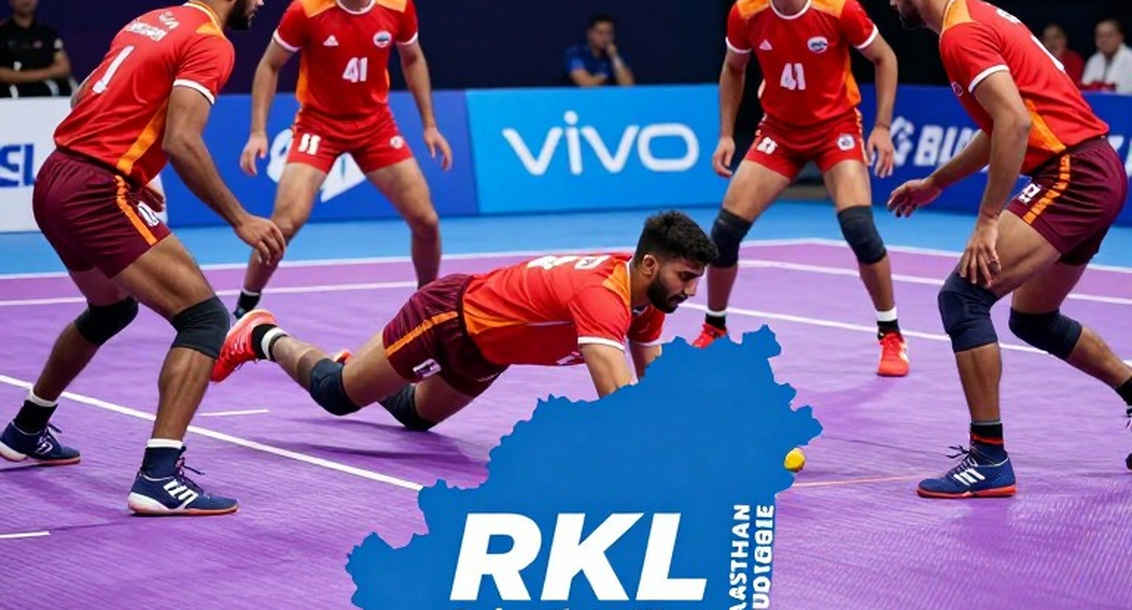
The rules deserve one clean pass, because the weight of this story sits in selection, not in scoring. A 13m by 10m court, seven against seven. One raider enters the opponent's half, must chant continuously inside 30 seconds, and must return home after touching a defender to score. Defenders who stop him inside their own half earn a tackle point. Break the cant and the raid dies. Wipe out an entire side and the opponent gets two bonus points while the eliminated side revives in full, an All Out reset. Standard Style, the rectangular international format used at the Asian Games, is what this event implies; Circle Style, the rural Punjabi variant, is not in play.
So the issue is clear. From October 21 to 31, 2026, in Ahmedabad, a new international fixture launches with fourteen Commonwealth nations. The Amateur Kabaddi Federation of India has announced a seventeen-player probables list with none of the twelve Asian Games gold-medallists. Iran and Chinese Taipei are not Commonwealth members, so they are out.
Kabaddi's professional economy runs through the Pro Kabaddi League, founded in 2026. A strong PKL season buys a national cap; a national cap buys a railway, police or army job. For players from rural backgrounds, that cap is not only honour, it is a livelihood door. A selection list here is a social and economic document as much as a sporting one. The report driving the debate, a list-style piece from the digital outlet Khel Now, promises the names of the missing stars in its headline and never delivers them in the body. No statistics, no raid-success rate, no tackle-success rate. What remains is an inference and a closing app-follow request.
Read selection as match design and the first clarity arrives: this is a roster-construction story, not a tactics story. No football side fields a full-strength squad for a low-stakes league fixture, and no kabaddi federation burns a gold-medal core on a low-stakes international window. The real question is not who was dropped, but why this event became low-stakes enough to rest them.
Iran and Chinese Taipei, the only genuine challengers, are absent. When the best version of the opposition is missing, the result is pre-decided. Rotating the gold squad avoids needless risk; capping domestic and PKL performers builds the bench for the next Asian Games squad.
A parallel sits here. Football's five-substitute rule rewards deep squads, yet it also turns the final twenty minutes into a war of attrition for big clubs. National-team rotation carries the same duality in kabaddi: it opens the door for young players, and it lets a federation move without explaining its reasoning. The names on the list are not established; the names left off carry no explanation either.
The data trap is equally visible. Good domestic form and PKL performance are claims, not evidence. In football, distance covered and high-intensity sprints are packaged as effort metrics, and pointless running produces pretty numbers too. Kabaddi's equivalent is raids attempted or minutes on the mat, and volume says nothing about real quality. The questions that matter are successful raid percentage, the conversion rate on do-or-die raids, and how many points a tackle chain recovers. The source report supplies none of them, so the whole debate about the dropped stars' strength rests on no numbers at all.
Transparency is the central question. Without a published rationale, resting twelve gold-medallists can be routine rotation or internal politics. AKFI's history is turbulent, marked by election disputes and derecognition episodes, which makes list transparency more urgent. Whether the International Kabaddi Federation has sanctioned this event is also unstated. When even the sanctioning body is unclear, how much weight does an Indian gold carry?
Then there is the timeline gap. The report implies India has already won Asian Games 2026 gold in Japan, then rests those champions for an October 2026 event in Ahmedabad. Checked against the Aichi-Nagoya schedule and kabaddi's inclusion, that timeline is tight and at points inconsistent. A piece that promises a list and withholds it should not have its timeline accepted without question either.
Kabaddi and football look like separate sports, yet both are the same spatial problem. In football, the half-space is not empty; it is a trap waiting for the press. In kabaddi, one side of the court is deliberately left open so the raider enters, and the defensive chain closes around him. In both, the question is who sets the trap and who steps into it. In Ahmedabad, the organisers set the trap themselves, removing the two strongest sides from the draw.
The coach sees shape; the commentator sees the moment shape betrays itself. Here the shape is clean: a new event, fourteen nations, seventeen names. The betrayal sits in the blank space on the list. A fifteen-hundred-word piece that calls twelve gold-medallists dropped without naming them is not analysis, it is a traffic tactic.
A transfer window is a delayed pressing scheme with better PR. A national cap is similar: an economy built around a symbol, where reputation often outweighs documented merit. Just as a massive signing-on fee for a free agent bypasses financial scrutiny, the label of an established star can bypass performance verification in selection. This event inverted it, dropping stars while never proving the replacements' quality. Both cases share the same transparency deficit.
The Commonwealth framing is the real ceiling. Membership admits India, Pakistan, Bangladesh, Sri Lanka, England, Kenya and South Africa, but excludes Iran and Chinese Taipei, precisely the next two strongest Standard Style sides behind India. Bangladesh and Pakistan are strong at grassroots level but lag in professionalisation, and Pakistan is stronger in Circle Style. England, Kenya and Sri Lanka are development tier. The field is broad, shallow.
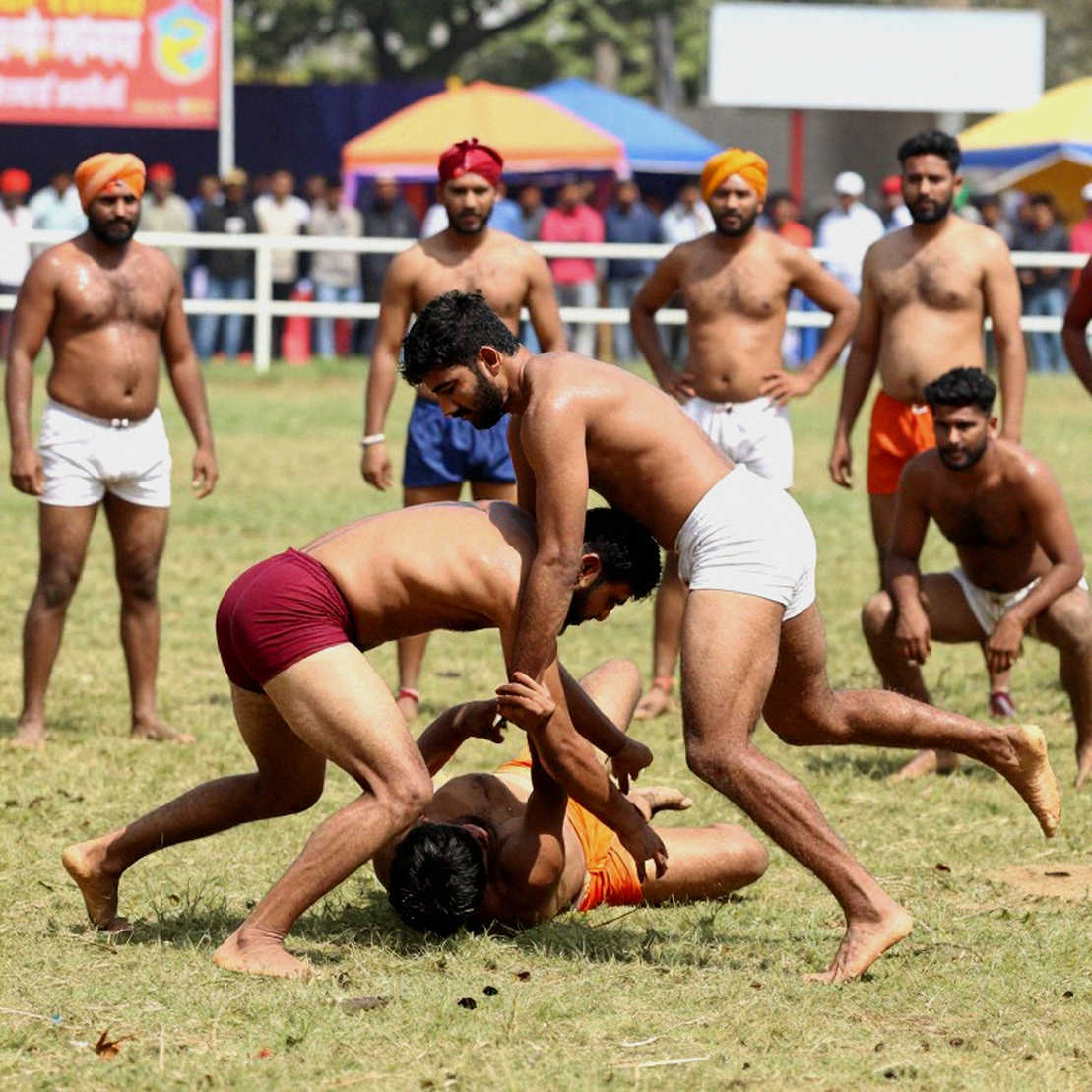
Culturally, this event's value lies in its signal of internationalisation, not in genuine competitive testing. Kabaddi carries nearly four thousand years of South Asian heritage and has risen from mud akhadas into a professional indoor product. The long Olympic ambition remains unmet. A Commonwealth channel opening a new international path is welcome news, but with the best challengers absent, its signalling value stays limited.
The commercial picture is opaque. Broadcast rights and sponsorship data are absent from the report. If a new, low-profile event is not televised at scale, its commercial value approaches zero beyond an India-hosted novelty. Digital list-style articles exist to fill exactly that void: a big headline, an empty body, a follow request at the end.
The narrative engineering is visible too. A list-based piece, a federation-neutral tone, a closing app prompt, and the story ignites briefly before dying from missing names and numbers. With no named aggrieved player, how long does a controversy last? Realistically a month, then oblivion, unless a dropped star reacts publicly or the selected rookies fail on the mat.
The centre of the debate is misplaced. Everyone asks which stars were left out. The weakest part of the story is that it names no player at all, so the controversy dissolves into mild murmuring. The inverse also deserves attention: the biggest risk around this event is institutional, not competitive. Where the sanctioning body is unclear and the selection rationale unpublished, the international signal is close to zero no matter how large the result.
One finer point remains. The emotion around the dropped stars' lost opportunity is real, yet it masks the actual problem: there is no measurable standard showing how open the cap door is for young players. The alternative reading deserves equal weight. Perhaps this is routine rotation and no controversy at all. But where the reasoning is withheld, even that benign reading stays an unproven guess. The absence of transparency blinds both directions: the critic does not know why, and the supporter does not know why.
Three things to watch next. If the selected seventeen take the mat in Ahmedabad, their real successful raid and tackle-success numbers will show whether the camp logic worked. Whether AKFI publishes selection criteria is the second signal. The third is the largest: whether this Commonwealth event is a one-off or becomes a recurring circuit. If the answer is circuit, today's list controversy becomes a small footnote in the record.
Related Players
Recommended
New Horizons for Commonwealth Kabaddi on Bangladeshi Soil: A Comprehensive Analysis2026-10-13
Where the List Stops Naming: Commonwealth Kabaddi Championship 2026 and India's Selection Question2026-10-09
Asian Games 2026 Kabaddi: Bangladesh and Pakistan Top Groups on Day 1, Dramatic Wins Over Korea and Chinese Taipei2026-10-18
India 48–24 Nepal: A Third-Lane Data Brief and an Unfinished Sum Before the Final2026-09-26
India's Kabaddi Victory at Asian Games 2026: Crushing South Korea 63-31 to Stay on Course for Gold2026-10-02
The Compound Interest of the All Out: India's Raid Engine and the Invisible Wall of Women's Kabaddi in a 48-24 Scoreline2026-09-26
Asian Games 2026: Indian Men's Kabaddi Team Seal Semi-Final Spot with Win over Bangladesh2026-10-15
The 37–34 That Doesn't Add Up: A Structural Read of the India–Iran Kabaddi Final2026-09-26
Recommended
The Bonus-Line Ledger: What 48–25 Hides About India's Defence2026-10-17
Pawan Sehrawat Outside the Starting Seven: The Call No Ledger Can Explain2026-09-26
The Half-Space Trap: Iran's Raid Rhythm vs India's Defensive Chain — A Tactical Reading of the Asian Games Kabaddi Finals2026-10-07
Pawan Sehrawat: The Rise of Kabaddi's Flying Star2026-10-15
Seven Minutes Before the First Whistle: Pawan Sehrawat's Bench, an Unsourced Team Sheet, and the Real Question of a Gold-Medal Final2026-09-26
Asian Games 2026: India-South Korea Kabaddi 63-31 Score, Unverified Data and the First Test of Blockchain Verification2026-10-18
Pawan Sehrawat Out of the Starting Seven: India's Final Gamble and the Ledger of a Quiet Decision2026-09-26
Asian Games 2026: India 37-21 Chinese Taipei — The Real Signal Behind the Unbeaten Run2026-10-15