
Laver Cup's 3-1: Why Friday's Lead Hides the Arithmetic of Nine Matches
**Core answer:** লেভার কাপের শুক্রবারে টিম ইউরোপ ৩-১ এগিয়েছে, তবে জয়ের জন্য দরকার ১৩ পয়েন্ট; শনিবারে ৮ ও রবিবারে ১২ পয়েন্ট বিতরণ হয়, তাই এই লিড সংখ্যাগরিষ্ঠ নয়। **Key facts:** - শুক্রবারে ৪ পয়েন্ট বিতরণ, টিম ইউরোপ নিয়েছে ৩, জয়ের লক্ষ্য ১৩। - চারটি ম্যাচের দুটি ১০ পয়েন্টের ম্যাচ টাইব্রেক গেছে: রুড ১০-৮, নাকাশিমা ১০-৭। - আলকারাস-মেনসিক জুটি জিতেছে ৬-৪, ৬-৪ — টাইব্রেক-বিহীন একমাত্র ফল। - রাফায়েল জোদার ৬-২, ৬-৩ হারিয়েছেন আলেকজান্ডার বুবলিককে। - বেন শেলটন এক সপ্তাহ আগে নাম প্রত্যাহার করলে ১৬ নম্বর র্যাঙ্কের ব্র্যান্ডন নাকাশিমা দলে আসেন। **Source attribution:** সোর্স: লেভার কাপ শুক্রবারের ম্যাচ রিপোর্ট; সোর্সে প্রকাশের নির্দিষ্ট তারিখ উল্লেখ নেই, তাই সময়-সংক্রান্ত সিদ্ধান্ত সীমিত আস্থার সঙ্গে গৃহীত। **Related Q&A:** প্রশ্ন: লেভার কাপে কি র্যাঙ্কিং পয়েন্ট পাওয়া যায়? উত্তর: না, এই ইভেন্টে কোনো এটিপি র্যাঙ্কিং পয়েন্ট নেই, তাই কারও পয়েন্ট ডিফেন্ডের চাপ তৈরি হয় না। প্রশ্ন: শুক্রবারে টিম ইউরোপের লিড কতটা নির্ধারক? উত্তর: কাঠামোগতভাবে দুর্বল, কারণ ২৪ পয়েন্টের মধ্যে ২০ তখনও বাকি এবং ১২ পয়েন্ট রবিবারের। প্রশ্ন: এই ম্যাচ থেকে কারও Form বিচার করা যায়? উত্তর: যায় না, এক দিনের চার ম্যাচের নমুনা এবং কোনো সার্ভ-রিটার্ন ডেটা না থাকায় যে-কোনো দিকের সিদ্ধান্ত অতিরঞ্জিত হবে।
Laver Cup's 3-1: Why Friday's Lead Hides the Arithmetic of Nine Matches
Jakub Mensik left the court in the evening session having lost a 10-point match tiebreak 7-10 to Brandon Nakashima. Two hours later he walked back out, this time beside Carlos Alcaraz, and produced the only scoreline of Friday that needed no tiebreak at all: 6-4, 6-4. Same player, same day, beaten in a shootout and then cleanest of anyone on court.
Eight years of notebook-keeping across track, swimming and multi-sport events have left me with one habit: when a scoreline arrives, I write the question first and the verdict later. Without serve percentages, return points won or break-point conversion, a scoreline is not proof. It is a hint. And crowning a winner on a hint is not journalism; it is guesswork.

Context: this event awards points, not ranking points
The Laver Cup is a three-day Ryder Cup-style team exhibition, Team Europe against Team World. There are no ATP ranking points at stake, nobody is defending anything, and no player's trajectory can be read off one week of results. What exists instead is an escalating points ladder: 1 point per win on Friday, 2 on Saturday, 3 on Sunday. Four matches a day, twelve across the weekend, and the first team to 13 of a possible 24 wins.
Those numbers deserve memorising. Friday offered four points in total. Europe took three of them. The target is 13. Friday was an opening paragraph, not a verdict.
I should be straight about the source: a short match report carrying no performance data for any of the four matches — no first-serve percentage, no return points, no winner-error counts, not even a publication date. Every information point arrives without attribution, so my confidence cap on all of it is medium. "I built the pipeline before I trusted the pattern" — and here the pipeline is half empty. Still, what can be counted should be counted, because the part left out of the arithmetic is usually the part that says the most.
Core: every Friday result is written in the language of a fast indoor court
The indoor hard court at London's O2 Arena rewards serve and first strike, and punishes pure rally tolerance. Friday's results fit that physical reality. Two of the four matches ran to a 10-point match tiebreak — Casper Ruud 10-8, Nakashima 10-7. That is not coincidence. In a format where a deciding third set is replaced by a shootout, thin margins are the rule. One serve, one return, one bad decision, and the match is over.
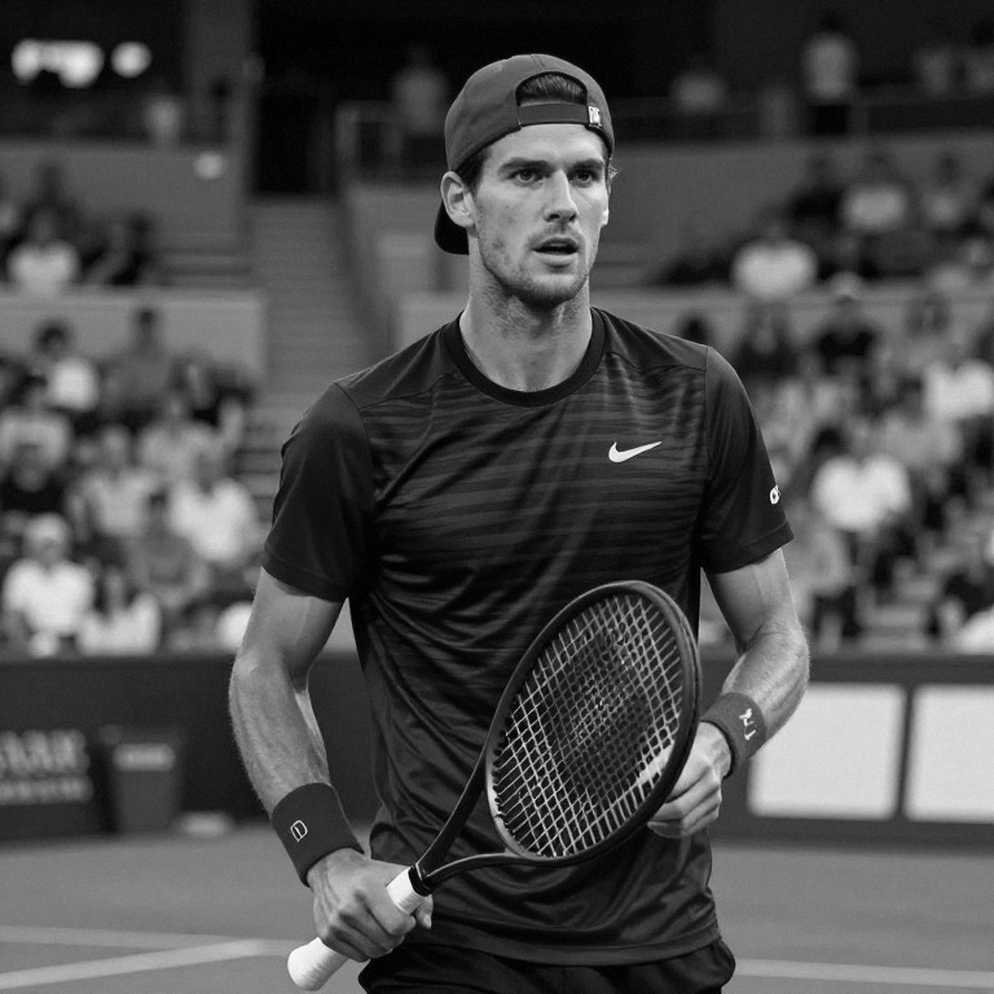
What interests me more is what two tiebreaks in four matches implies: on paper the ranking gap between these two teams looks wider than the gap on court. Alexander Bublik lost 2-6, 3-6 to Rafael Jodar, then lost the doubles with Taylor Fritz. Two defeats in one day. For a high-variance, touch-first, improvisation-led player, the Laver Cup's compressed format is the least friendly environment on the calendar. There is no time to find rhythm inside a rally, because each point is its own event.
Mensik's two-match day therefore has to be read on two levels. As a resilience signal it is admirable — carrying a bruising tiebreak loss into an evening doubles match is not psychologically easy. It is also a load signal. In the week immediately after the season's final Grand Slam, playing singles and doubles in one session doubles the physical draw while the ranking reward is zero. Muscle fatigue is never written into the record; it is written into the decisions.
Team Europe's use of Alcaraz is telling. On Friday he played doubles only, no singles. In a format where Saturday and Sunday matches weigh two and three times Friday's, protecting the biggest name on day one is not courtesy. It is arithmetic. And it cuts both ways: the event's commercial model now rests on a small pool of names, with Alcaraz at the centre.
The result that missed the headline is the day's cleanest piece of information
Rafael Jodar's 6-2, 6-3 win is Friday's only straight-sets singles result without a tiebreak, and the highest signal per word in the entire report. Beating a tour-level opponent in straight sets is more than a point; it is a door opening. His place on the roster is a captain's pick, institutional endorsement rather than ranking entitlement — and the fame filter swallowed it. A one-point doubles win led the story. A one-point singles win stayed in the footer.
Brandon Nakashima, meanwhile, justified the bench. Ben Shelton — identified in the report as a US Open runner-up — withdrew a week out, and Team World called up the world No. 16. The reason for the withdrawal is unstated: fatigue, injury and scheduling preference cannot be separated from the available information. What can be said is that the bench depth held; a headline withdrawal did not dent the day's output.
Andre Agassi is named as the holder of Team World's roster — the most structurally significant management detail in the report, pointing to a generational handover on the bench. Equally notable is what is absent: no member of the Big Three appears anywhere. The Laver Cup has culturally moved past that era, with Alcaraz as the new anchor.
The contrarian read: 3-1 is not control, it is an unfinished sentence
A headline reading "Europe in control" keeps 3 of 13 and leaves Saturday's 8 points and Sunday's 12 still live. If Team World takes three of Saturday's four matches, the tie flips outright. Friday's scoreline predicts Friday; nothing more.
That is also where the most under-reported risk gets dropped: workload, not competition. Mensik and Bublik each played twice on day one, days after the final Grand Slam, for no ranking reward. My position on injury has not moved in a decade: fixture congestion is itself the biggest aggressor, and no medical team can undo two matches in a day. Here it is mitigated by captaincy rotation, not by treatment.
The third counterintuitive fact is a null result. These matches carry no ranking consequence — no points defence, no mandatory-entry rules, no late-withdrawal penalty exposure. Analysis fails less often from bad arithmetic than from importing risks that do not apply. "The quiet game is where the market actually moves" — this week's market is moving in selection, load and ticketing, not in ranking ladders.
One chronology flag. The report's background says Europe has won five times and Team World took a third title last year: eight completed editions. With 2026 cancelled, that makes the current event the ninth — self-consistent internally, but one year later than a naive post-US-Open reading. The venue detail is likewise verifiable rather than verified: an O2 return is plausible, not established. Until then I will not use it as a constant in time-sensitive copy.
Looking forward
Before Sunday's session, anyone treating 3-1 as a seal should hold two numbers: 20 and 12. Twenty points remain alive, twelve of them land on Sunday. I will be watching three things — whether Alcaraz plays singles on Saturday, whether Jodar stays consistent at tour level across the next six months, and when Shelton's next entry appears. I pre-register predictions with dates and audit them afterwards, because "A good system is a promise you keep to your future self. Before the arena roars, someone has to map the noise." On this Friday the noise was tiebreaks, a borrowed name and a 3-1 scoreline. Underneath it, the arithmetic is slower and much quieter.