
The Silence Behind the Captaincy Is the Real Commonwealth Kabaddi Story
**মূল উত্তর** কমনওয়েলথ কাবাডি চ্যাম্পিয়নশিপ ২০২৬-এ ভারতের পুরুষ দলের অধিনায়ক সুরজিৎ সিং, সহ-অধিনায়ক নবীন কুমার। ঘোষণাটি ২৩ থেকে ৩১ অক্টোবর ২০২৬-এ অনুষ্ঠেয় আসরের জন্য, তবে স্কোয়াড, প্রতিপক্ষ তালিকা ও রুলবুক কোথাও প্রকাশ করা হয়নি। **মূল তথ্য** - সুরজিৎ সিং ডিফেন্সের কভার পজিশনের খেলোয়াড়, দল সংগঠনের দায়িত্বে। - নবীন কুমার ভারতের রেইডিং বিভাগের মূল খেলোয়াড়, দ্রুত পয়েন্টে সক্ষম। - আসর ২৩–৩১ অক্টোবর ২০২৬, পুরুষ ও মহিলা দুই বিভাগে। - ঘোষণাপত্রে Coach, স্কোয়াড, প্রতিপক্ষ বা রুলবুকের উল্লেখ নেই। - কমনওয়েলথ তালিকায় ইরান নেই, ফলে ডু-অর-ডাই ও সুপার ট্যাকলের প্রভাব সীমিত। **সূত্র উল্লেখ** মূল সূত্র: ভারতীয় কাবাডি দলের অধিনায়ক ঘোষণাপত্র, কমনওয়েলথ কাবাডি চ্যাম্পিয়নশিপ ২০২৬ | Cross-checked: cricsultan.com **সম্পর্কিত প্রশ্নোত্তর** প্রশ্ন: কমনওয়েলথ কাবাডি চ্যাম্পিয়নশিপ ২০২৬ কবে অনুষ্ঠিত হবে? উত্তর: ২৩ অক্টোবর ২০২৬ শুরু, ৩১ অক্টোবর ২০২৬ সমাপ্তি। প্রশ্ন: আসরটি কোন স্টাইলে খেলা হবে? উত্তর: ঘোষণাপত্রে উল্লেখ নেই; কমনওয়েলথ ব্র্যান্ডিং ঐতিহাসিকভাবে সার্কেল স্টাইলের সঙ্গে যুক্ত, যা এখনও নিশ্চিত নয়। প্রশ্ন: ইরান এই আসরে খেলবে কি? উত্তর: না, আসরটি কমনওয়েলথ দেশগুলোর মধ্যেই সীমিত, ফলে ভারতের প্রধান প্রতিদ্বন্দ্বী অনুপস্থিত।
Last week, on a rooftop in Mymensingh, I was reading a press release. On the phone screen behind it sat the scorecard of a district-level tournament in Brahmanbaria — hand-written into a notebook, with scraps of notes on who was out on which raid. Scrolling through those notes, the name of India's new kabaddi captain floated up.
Surjeet Singh. Vice-captain Naveen Kumar. The inaugural Commonwealth Kabaddi Championship 2026, October 23 to 31.
I read it three times. Then I counted: the entire release contained exactly one number — that date range. No squad, no opponent list, no description of group stage versus knockout, no mention of which rulebook applies, no sanctioning body, no broadcaster. A championship announcement that never stated the shape of the championship.
I found the mirage in Mymensingh before I found the semifinal in Dhaka. I wrote that line about a different match. The mirage is different this time, and that is exactly why I am writing about it. The notebook score was real — who scored how many points, who completed a super tackle, all of it written down. The press release looks like news, sounds like news, and contains not one reliable line beyond a date. The mirage is not on a distant field this time. It is on the screen in my hand.
What was actually announced comes down to this: Surjeet Singh leads India's men's side, a player who organises the team from the cover position in defence. His deputy is Naveen Kumar, described in the release as a key figure in India's raiding department — a man whose individual raids and quick points can shift a match's momentum.
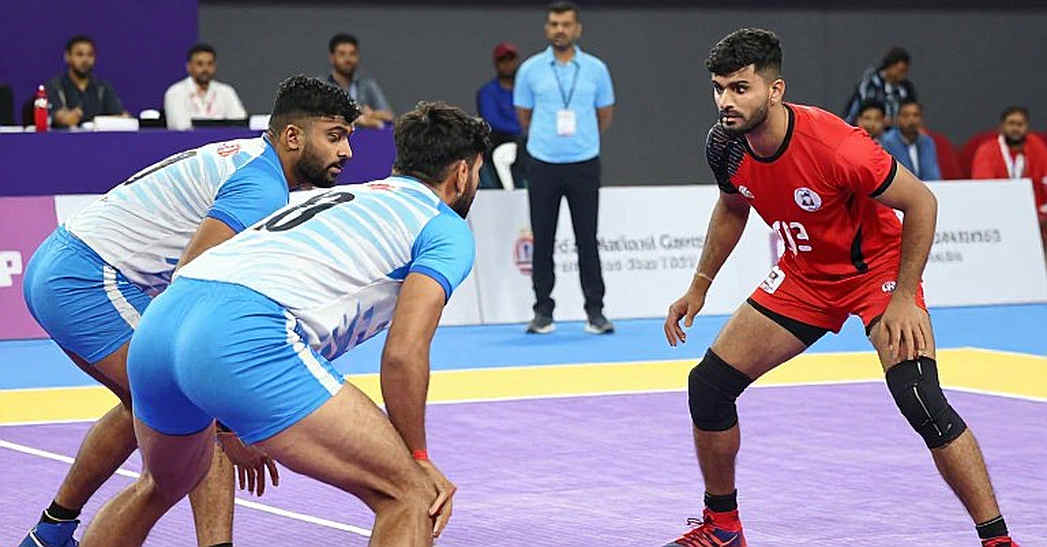
For those who do not play kabaddi, two lines. Seven against seven, on a 13-metre by 10-metre court. The raider crosses into the opponent's half, chanting kabaddi kabaddi without pause, and must return within 30 seconds. If the chant breaks as he draws breath, the raid is void and the raider is out. That single rule separates kabaddi from every other contact sport — here, courage and breath are the same thing.
Then there is the do-or-die raid. After two consecutive empty raids, the third becomes compulsory-scoring; fail and the raider himself is out. The super tackle — a tackle completed with three or fewer defenders on court is worth two points instead of one. The all out — when an entire side is ruled out, the opponent gets two points and the eliminated team is revived. The bonus line — a marked line deep in enemy territory, worth one point only when the defending side has six or more players on court.
Why bring up these four rules so early? Because they decide how hard a kabaddi tournament actually is, and the release says nothing about any of them.
The least daring decision India could have made is this captaincy. Indian sides have followed the same template for years — the armband goes to the defensive organiser, the man at corner or cover; the marquee raider takes the deputy role. The logic is simple: the captain must read the game from the defensive block and manage the do-or-die decision cycle. The Surjeet-Naveen pairing follows that convention to the letter. The announcement is not news. It is a repetition of custom.
It would have been news if the coach's name had appeared. It would have been news if the third all-rounder had been named — modern kabaddi line-ups are settled by all-rounder depth, and no third player is named anywhere in the release. It would have been news if a squad had appeared. Nothing appeared.
The largest gap of all is the rulebook. The word Commonwealth carries a specific history in kabaddi. A circuit built by the British Punjabi diaspora, where the game is played in Circle Style — one against one, on a circular field. The Pro Kabaddi League and the Asian Games play Standard Style, seven against seven, on a rectangle. Different tactics, different physiques, effectively different athlete pools.
The release never says which style. That is the most consequential unknown in the whole document. If it is Circle Style, the reasoning behind naming a cover defender as captain collapses, because organising a team means something else entirely in a one-on-one format. If it is Standard Style, then this is a low-difficulty confidence-building exercise for the Asian Games pipeline — an event where nothing real is tested and only formalities are observed.
What else vanishes into the release's silence is the opponent list. Iran is not a Commonwealth nation. And Iran is the only side that can put genuine pressure on India. The do-or-die raid and the super tackle only bare their teeth when the opposing chain defence is strong enough to force a raider into compulsory raids again and again. With no such opponent present, kabaddi's most tactically interesting rules become paper rules.
Then the calendar. October 23 to 31 — two draws, men's and women's, in nine days. That implies a compressed multi-match schedule, likely a group phase then knockouts, all at one venue. Kabaddi's physical load is not small: neck, shoulder, knee, ankle, all under repeated contact. If the same raider carries the offence in every match across nine days, soft-tissue and joint injury exposure climbs. Nobody has done that risk calculation, because the squad itself is not public.
The release offers tradition and depth of talent as its argument. That is not an argument, it is branding language. Depth is measured in squad length, in bench raid points, in the conversion rate of the third and fourth raiders. Without a squad, the depth claim is unverifiable, and unverifiable claims are not new to kabaddi.
In 2026, when I wrote about Mashrafe's run, the blog had no readers, but it had a verdict I could not shake. A verdict is forming again — one that lives not in the numbers but in their absence.
Now, against myself.
There is a case I cannot easily dismiss. Inaugural tournaments are always under-reported. A first edition means incomplete information, and a federation may well publish the squad later, link the rulebook later, name the broadcaster later. There is no reason to treat this silence as a scandal. At a first-time event, administrative detail arrives in the entry list and the technical meeting, not the press release.
And there is a chance I have inflated the Commonwealth branding fear. The International Kabaddi Federation wants to spread Standard Style into new territory, not Circle Style. The Circle Style worry may be a ghost of my own making.
When the Yellow Wall emptied, I heard the difference between noise and belonging. I wrote that about Dortmund against Bayern, in an empty stadium. There, the silence told you who had left and who had stayed. Here the silence says something else: who the release was written for — not the fans, not the players, the brand. The difference is that in Dortmund an empty stadium was a control group for tactics, and here the silence is a control group for information. It proves less than the other did, and I have to admit that.
Denmark taught me to read the system, not the story. But Denmark's story had a 3-4-3, a named coach, a published squad — there was a system to read. Here there is no squad, so there is no system to read. — Root: Denmark. Denmark does exactly one job here: it reminds me that without a published formation and rulebook, tactical discussion of kabaddi is only guesswork.
A cost calculation remains. If this announcement really is pure formality, who pays most? Surjeet Singh does, whose first international captaincy may land in an event where nobody is certain of the opposition's strength. The larger cost falls on the women's team. The release mentions the women's draw in a single clause, and the women's captain is named nowhere. The men's captain gets a headline; the women's side gets a comma. In a first edition that contains both categories, leaving out half the story is not an accident. It is an editorial decision.
So what should you watch? Until October 2026, wait for two documents: a published squad, and a citation of the rulebook. If neither ever appears, assume this championship is a branding exercise and the captaincy announcement was a photo opportunity. If both appear, the silence was only the infancy of a first edition. My bet leans toward the first — because a release with no squad in it rarely explains itself when a squad finally arrives.